
Traditional Italian Bolognese Lasagna Recipe

What Defines Authentic Traditional Italian Lasagna Bolognese? The core of culinary excellence lies in respect for origins and the unbeatable quality of the ingredients used.
Adverts
A genuine Italian lasagna evokes the affective memory of grandma and the unmistakable flavor that only time and dedication can give to a dish.
It is essential to understand that this version we know and love has deep and honorable roots in the Emilia-Romagna region, notably in the historic city of Bologna.
It is crucial to understanding the recipe that the sauce ragù, the true and unmistakable Bolognese, differs immensely from the hasty and simplified adaptations that have become popular elsewhere.
Patience in preparation, almost a culinary virtue, reveals itself as the secret sauce of this icon of world gastronomy.
Adverts
The real difference lies precisely in the slow cooking of the sauce, which must be thick, complex and with fully integrated flavors.
The filling, in turn, is not limited to simple ground meat, but is in fact a harmonious blend of flavors and textures.
Traditionally, a combination of beef and, often, pork or veal is used to give greater depth and richness to the final flavor.
Furthermore, dairy products are absolutely essential to achieve the ideal creaminess of the mixture.
A besciamella (white sauce) works as the perfect counterpoint, balancing the acidity of the tomato and the undeniable richness of the meat.
Like the Sauce Ragù Is it Different from the Common “Bolognese”?
O ragù is, without a shadow of a doubt, the soul of traditional Italian lasagna bolognese, and its preparation must be treated with the seriousness of a true culinary ritual.
It all starts with the soffritto, the aromatic and non-negotiable base composed of celery, carrot and onion chopped in brunoise.
The meat is subsequently sealed and cooked very slowly, with the addition of wine and, surprisingly to many, milk.
This unexpected ingredient, milk, has the technical function of softening and enriching the meat fibers, giving it an incomparable tenderness after long hours of cooking.
The cooking process, ideally and to ensure excellence, should last at least two to three hours.
This extended time allows all the flavors to blend into an unparalleled gustatory symphony, enhancing every note.
Read more: How to Make Perfect Garlic and Oil Pasta Without Sticking
Imagine the sauce as a complete orchestra; each ingredient has its fundamental role, but it is time that governs the performance and ensures harmony.
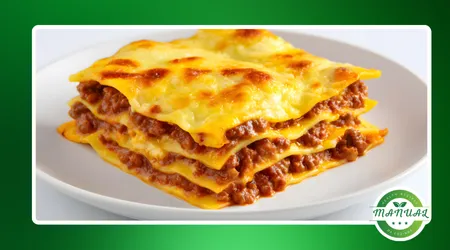
The real one ragù Bolognese is not excessively liquid and has a deep, reddish brown color.
The use of tomatoes is more discreet in the original recipe than one might think, serving more as a flavor complement than as the primary base.
The desired final consistency is dense, able to adhere perfectly to the layers of fresh pasta.
What is the Importance of Fresh Pasta and Besciamella on the Plate?
The dough, ideally prepared with fresh eggs and quality semolina, serves as the solid foundation of this edifice of complex flavors.
It needs to be thin enough to cook perfectly in the oven without being heavy or overly al dente.
The slightly wavy edges, typical of fresh handmade pasta, hold the sauce and fillings divinely well.
++ What is the difference between dry pasta and fresh pasta?
A besciamella (or béchamel sauce) is the creamy and smooth counterpoint to the striking intensity of the ragù.
Its main structural function is to moisten and bind the layers of the assembly, ensuring that the dish never dries out in the oven.
The correct proportion between the elements is crucial: it cannot be watery, which would result in a soggy lasagna, nor excessively thick.
Butter, flour and milk, subtly flavored with a touch of nutmeg, form this essential dairy base.
In an authentic traditional Italian lasagna bolognese, there is no detail that can be overlooked.
Why Does the Original Recipe Require So Much Care and Patience?
Italian cuisine, in its purest essence, is a celebration that values the calm and love that goes into preparing food.
Slow cooking is the way to extract the maximum flavor from each component, elevating the dish to a higher level.
This dedication is not just a technique, it is a deep cultural heritage, a celebration of a plentiful table and family life.
++ How to make crispy homemade pizza dough
According to the respected Italian Cucina Academy, the preparation of lasagna bolognese must be carried out with care and extreme attention.
The entity, dedicated to protecting the country's most solid culinary traditions, reinforces the importance of the artisanal method.
This institution emphatically emphasizes that perfection of flavor and texture is achieved through strict fidelity to the centuries-old recipe.
Patience, in this context, is proof that food is much more than mere nutrition; it is an expression of affection, history, and identity.
Think about the complexity and evolution of a Barolo wine for aging.
It needs years for its tannins to round out and its tertiary aromas to fully reveal themselves, just as the ragù It takes hours to improve its texture and deepen its flavor.
Rushing the process is like wanting to witness a flower bloom in just a few seconds. The reward for the wait, however, is a dish with a deep, complex, and unforgettable flavor.
Which Cheese to Use for the Masterful Finishing Touch?
The noble Parmigiano Reggiano is the cheese of choice, the touch of salinity and the powerful umami that finishes and completes the dish with distinction.
Its grainy texture and intense flavor bravely withstand the heat of the oven and contribute to the formation of the iconic golden and crispy crust.
Grating cheese just before use makes a noticeable difference in the final flavor explosion in your mouth. It's a golden rule for gastronomic excellence: avoid pre-grated cheeses.
A traditional Italian lasagna bolognese demands and deserves the best, and Parmigiano Reggiano is, undeniably, that final master touch.
| Component | Essential Function in Lasagna |
| Ragù | Flavor and Depth Base (Slow Cooking) |
| Fresh Pasta | Soft and delicate structure |
| Besciamella | Connection and essential Creamery |
| Parmigiano-Reggiano | Umami Flavor and Gratin Crust |
The assembly of the layers, bathed in this perfect alchemy of sauces and pasta, is the climax of the preparation.
The oven, finally, seals the complex union of flavors and delivers the dish to the table, hot, fragrant and inviting.
A traditional Italian lasagna bolognese It is, without a shadow of a doubt, a living gastronomic heritage that deserves all our respect and careful attention.
Conclusion: The Legacy of Lasagna
This dish eloquently attests to the power of cuisine in telling rich stories of family, tradition, and attachment to one's homeland.
Preparing an authentic lasagna bolognese is, in essence, a genuine act of love and a sincere celebration of the simple and good life.
It is clear proof that the simplicity of the recipe, when handled with total mastery, always results in something great.
Enjoy the preparation process, the inevitable wait and, above all, the incomparable flavor of this timeless classic.
Frequently Asked Questions
What's the secret to keeping Bolognese sauce from being acidic?
The secret is to use a small amount of fresh milk during slow cooking. ragù, which actively helps to neutralize the natural acidity of the tomato and tenderize the meat, adding to the beneficial effect of the long cooking time.
Can I use dried pasta instead of fresh pasta?
Although fresh pasta, made with eggs, is the traditional and ideal choice, you can also use excellent quality dried pasta.
However, it is essential to pre-cook the dry pasta, leaving it al dente before starting to assemble the lasagna in the baking dish.
What is the best cut of meat for ragù?
The meat mix is widely preferred by chefs, like beef chuck combined with pancetta (pork).
Fat is essential for flavor and texture, so cuts with a good lipid content are best for true ragù.
How to prevent lasagna from drying out?
The secret to moisture is the correct and generous proportion of besciamella (white sauce) and ragù in the assembly.
A besciamella must be distributed generously between the layers, ensuring ideal humidity.
Covering with aluminum foil during the first half of cooking is also a technique that helps a lot to retain moisture.