
Crispy seaweed salad with sesame seeds and citrus vinaigrette.
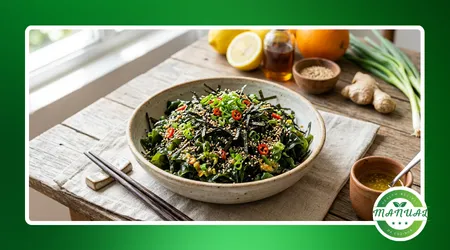
A Crispy seaweed salad with sesame seeds It's one of those rare culinary gems that manages to be both a manifesto for health and a delight for those who appreciate texture.
Adverts
On the plate, the sea vegetables cease to be a timid supporting player in the sushi and take center stage, delivering a freshness that seems to have been captured directly from the breaking waves.
We often view algae as something exotic or difficult to handle, but the truth is that they are surprisingly practical ingredients.
This guide was designed to demystify the preparation, focusing on what really matters: the balance between mineral density and citrus lightness.
Let's transform age-old ingredients into a functional experience that speaks to the fast pace and demands of today's palate.
Adverts
Mastering this recipe requires less technique and more sensitivity to understand the hydration points and the exact heating time.
The result is a vibrant dish, rich in iodine and omega-3, that goes beyond the obvious and offers an aesthetic vigor that few land vegetables can replicate.
Summary
- The hidden power in sea plants
- Choosing algae: Texture and flavor
- Recipe: Crispy seaweed salad with sesame seeds
- The science of lasting crispness
- Nutritional Difference: The sea on your plate
- Gastronomic Reflection
- FAQ
What are the real benefits of consuming seaweed?
Consuming algae is, in a way, reclaiming an ancestral form of nutrition that the Western world has neglected for decades while focusing on terrestrial monocultures.
They are veritable sponges of nutrients, concentrating minerals in proportions that would make any garden vegetable envious, especially in soils depleted by intensive cultivation.
The presence of iodine here is central to thyroid health, but the benefit goes beyond the basics.
Algae contain polysaccharides that act as silent modulators of the immune system, offering protection not found in synthetic supplements.
It's a natural pharmacy hidden beneath the waters.
Furthermore, nutritional science from 2026 reinforces how soluble fibers from algae, such as alginate, impact blood glucose levels.
They create a kind of gel in the stomach that slows down the absorption of sugars and promotes genuine satiety, something we rarely achieve with ultra-processed foods or off-the-shelf "fit" products.
Why are Wakame and Nori seaweed the best for this recipe?
Not all seaweed is meant for heat or salads, and understanding this hierarchy of textures is what separates a professional dish from an amateur one.
Nori, ubiquitous on sushi counters, provides that instant, brittle crunch that the brain loves, especially when it meets the warmth of sesame seeds.
Wakame, on the other hand, is the heart of the dish, with a more robust and meaty personality that absorbs the spices without losing its shape.
When properly balanced between hydration and quick sear in the pan, it delivers the famous "umami," that fifth taste that deeply satisfies the palate without being heavy.
The combination of these two varieties creates an interesting tactile contrast in the mouth.
When preparing your Crispy seaweed salad with sesame seedsYou're not just mixing leaves; you're creating a layered experience that goes from crisp to soft in a single bite.
How does citrus vinaigrette enhance nutrient absorption?
The use of citrus fruits here is not merely an aesthetic choice or a way to "cleanse" the palate of the marine flavor.
There's a chemical engineering process at play: ascorbic acid dramatically increases the absorption of plant-based iron, which is usually more difficult for our bodies to process.
For those who have reduced their meat consumption, this combination is almost mandatory to maintain adequate energy levels.
The acidity of the lemon and orange cuts through the richness of the sesame oil, creating a balance that prevents the salad from becoming cloying after the first few spoonfuls.
There's something brilliant about how vitamin C protects the colors of the dish.
It acts as a shield against oxidation, ensuring that the deep green of the Wakame remains vibrant and inviting, even if the dish takes a few extra minutes to reach the table.
Recipe: Crispy seaweed salad with sesame seeds and citrus vinaigrette
Forget rigid recipes; here the focus is on precise timing.
This version serves four people and has been adjusted so that each ingredient maintains its integrity, without turning into that shapeless mass that we often see in poorly executed preparations.
Necessary ingredients
- 40g of dried Wakame seaweed;
- 5 sheets of nori seaweed, cut into thin strips;
- 3 tablespoons of sesame seeds (a mix of white and black is visually superior);
- Juice of 1 Sicilian lemon and half an orange;
- 2 tablespoons of toasted sesame oil;
- 1 teaspoon of freshly grated ginger;
- Chopped scallions and chili pepper for a touch of heat.
Method of preparation
The secret begins with hydrating the Wakame: ten minutes in cold water is enough.
Drain patiently and press the seaweed against a dry cloth; any remaining water will be the enemy of the crispy texture we aim to achieve later.
Place the sesame seeds in a dry frying pan and heat until the seeds begin to "pop".
Process half of these seeds in a mortar and pestle to release the internal oil; this artisanal detail makes all the difference in the aroma that will perfume the kitchen.
Quickly sauté the wakame in sesame oil for about three minutes, just to warm it up and give it a shine.
The nori is added at the last minute, almost as a last resort, ensuring that it dries and becomes crispy without becoming bitter from the excessive heat.
In a separate bowl, emulsify the citrus juices with the ginger and the remaining oil.
Pour the liquid over the seaweed while it's still warm—this helps it absorb the seasoning—and finish with sesame seeds and pepper for a final touch of contrast.
What is the best way to store seaweed to maintain its crispness?
Moisture is the algae's nemesis; it attacks the cellular structure and transforms what was once crispy into something rubbery in just a few minutes.
Therefore, keeping a stock of dried seaweed in airtight glass jars and in dark places is a golden rule in the kitchen.
If you like to plan your meals for the week, an editorial warning: don't mix the vinaigrette ahead of time.
The acid is unforgiving to the delicate fibers of Nori and Wakame, so ideally the sauce should be kept in a separate container and only seasoned right before consumption.
If there are leftovers from dinner, storing them in the refrigerator will keep them for up to 24 hours, but be realistic.
The texture will be different, more like a preserve than a crunchy salad, although the nutrients and flavor will remain intact.
+ Dense bean salad with vegetables for a nutritious lunchbox.
Nutritional Table: Comparison of Algae vs. Terrestrial Vegetables
Below, the data shows why algae are often called "superfoods".
The mineral density, when compared to traditional vegetables like spinach, shows a huge difference in nutritional efficiency in small portions.
+ Healthy oatmeal bars with chocolate, 160 calories each, perfect for a snack.
| Nutrient (per 100g) | Wakame seaweed (hydrated) | Fresh Spinach | Why does it matter? |
| Calcium | 150 mg | 99 mg | Bone structure and teeth |
| Magnesium | 107 mg | 79 mg | Muscle recovery |
| Iodine | 4,200 mcg | < 1 mcg | Metabolism and energy |
| Iron | 2.1 mg | 2.7 mg | Oxygen transport |
| Fibers | 0.5 g | 2.2 g | Health of the microbiota |
What flavor variations pair well with this dish?
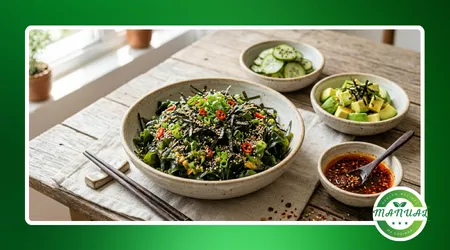
A Crispy seaweed salad with sesame seeds It's a blank canvas that welcomes bold experimentation.
Adding almost transparent slices of Japanese cucumber provides hydration that contrasts with the dryness of the seaweed, creating a refreshing sensation that cleanses the palate between bites.
Avocado is another underrated partner; its velvety fat embraces the saltiness of the seaweed, creating an almost luxurious experience in the mouth.
It's the kind of addition that transforms a simple appetizer into a light and sophisticated main course for warm evenings.
If you prefer a more intense flavor, a drizzle of chili oil or Korean chili flakes (Gochugaru) will raise the temperature of the dish.
The heat of the chili pepper complements the freshness of the vinaigrette beautifully, creating a cycle of flavors that entices you to take the next bite.
How to choose quality seaweed at the market?
Don't be fooled by generic packaging; visual quality says it all about what you're going to eat.
Premium seaweed has dark, deep tones, almost black or forest green, indicating that it was harvested and dried while respecting the plant's properties.
Avoid products that look pale or have excessive broken fragments at the bottom of the package.
This is usually a sign of prolonged storage or excessive exposure to light, which degrades both the umami flavor and the nutritional profile.
Whenever possible, choose suppliers who indicate the origin of the harvest.
Knowing that your seaweed comes from clean waters and sustainable management is not just an ethical matter, but a guarantee that you are consuming a food free of heavy metals.
+ Smart Substitutions: Classic Christmas Dishes in a Light Version
Gastronomic Reflection
Incorporating seaweed into your diet is more than just a wellness trend; it's a strategic gastronomic decision.
This recipe demonstrates that it's possible to combine extreme health benefits with a sensory pleasure that few salads can deliver so honestly.
The citrus vinaigrette acts as the conductor, organizing the marine potency and the fat of the sesame seeds, resulting in a dish that is pure balance.
It's a versatile option that transitions well between a business lunch and an elaborate dinner for discerning guests.
At the end of the meal, what remains is a feeling of lightness and the body nourished by essential minerals.
Experiment, adjust the acidity and textures to your liking, and let sea vegetables earn a permanent place in your kitchen.
To understand how algae aquaculture is helping to regenerate marine ecosystems, it is worth exploring the data from... Food and Agriculture Organization of the United Nations (FAO).
FAQ – Frequently Asked Questions
Can I substitute sesame oil with regular olive oil?
It's possible, but the dish will lose its soul. Toasted sesame oil provides a smoky and earthy note that is the ideal counterpoint to the acidity of the citrus and the saltiness of the seaweed.
Do children tolerate the taste of seaweed well?
Surprisingly, yes. The crunchy texture of nori usually pleases young children. Just go easy on the chili and ginger if they aren't yet used to spicier or more intense flavors.
Where can I easily find Wakame seaweed?
Specialty stores selling Japanese cuisine or natural product emporiums are the best places. Today, large supermarket chains already carry these items in the health food or Asian food section.
Is it necessary to wash seaweed even if it looks clean?
Yes, a quick rinse under running water before hydration removes the excess sodium that often remains from the dehydration process, resulting in a much more elegant final flavor.
Is this salad suitable for those on a low-carb diet?
Absolutely. Seaweed has a very low carbohydrate count and a near-zero glycemic index, making it one of the best options for maintaining a healthy diet without falling into the monotony of traditional leafy greens.