
Shredded cooked chicken in its own broth makes it even juicier.
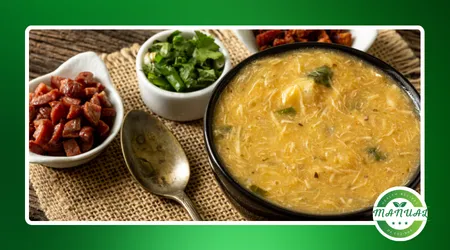
In this guide, we'll subvert the logic of dry, lifeless chicken breast. You'll understand how temperature control and the science of collagen work to enhance juiciness, transforming the basics into a strategic and profoundly flavorful culinary resource.
Adverts
More than just a recipe, we present a method to optimize your kitchen logistics without sacrificing flavor.
Let's explore everything from precise cutting to smart storage, ensuring your produce retains the freshness of something that just came off the grill.
Summary
- The logic behind cooking in one's own broth.
- Choosing the cut: besides the obvious chicken breast
- The step-by-step guide to absolute humidity.
- Hidden flaws that sabotage the texture.
- Technical data: Nutrition and Performance
- High-performance preservation and freezing
- FAQ – Direct answers to real questions
The logic behind cooking in one's own broth.
Deep cooking isn't just about "boiling water." When we prepare the shredded cooked chicken in its own brothWe create a saturated environment where proteins don't have to fight against dry heat, which usually drives out internal juices.
There is a clear sensory advantage here: collagen, when gently heated, melts and fuses with the liquid.
Adverts
This creates an almost velvety texture, something that grilled and then chopped chicken will never be able to replicate in the mouth.
Nutritionally, the benefit is pragmatic. The vitamins that are usually lost in steaming or discarding the water remain there, integrated into the meat.
It's an honest and intelligent way to take full advantage of what food has to offer.
Here's the practical roadmap to transform theory into flawless execution. This method focuses on liquid retention and maximum flavor extraction.
Necessary Ingredients
- 1 kg Chicken (suggestion: 700g of chicken breast and 300g of boneless chicken thigh)
- 1 large onion cut into quarters
- 1 medium carrot, thickly sliced.
- 2 crushed garlic cloves
- 1 celery stalk (optional, for depth of flavor)
- 1 bay leaf and sprigs of fresh thyme
- Salt and black pepper to taste
- Water filtered enough to cover
Step by Step: The Technique of Succulence
1. The Aromatic Base
In a large pot (or pressure cooker), place the vegetables and herbs. Arrange the chicken pieces on top.
There's no need to sauté the meat; the goal here is gentle cooking that preserves the whiteness and tenderness of the meat fibers.
2. Controlled Cooking
Add water until the chicken is submerged (about two fingers above the meat). Season with salt.
- In a regular pot: Cook over medium-low heat for about 25 to 30 minutes after it starts to boil.
- In a pressure cooker: Count 12 minutes after the pressure builds. Turn off the heat and let the pressure release naturally so as not to "shut down" the fibers.
3. Strategic Cooling
Remove the chicken from the liquid, but do not discard the brothLet the meat rest for 5 minutes before shredding. This allows the internal juices to redistribute.
4. The Shredding Method (Choose yours)
- In the Mixer: Place the still-warm pieces in the mixing bowl. Use the paddle attachment on low speed for 20 seconds.
- In the Pressure Cooker: Drain the liquid (reserve it!), close the pot and shake vigorously for 30 seconds.
- On the Fork: Use two large forks, pulling the fibers in the direction of growth.
5. Finishing with Broth
After shredding, return the meat to a container and add two ladles of the cooking broth Strained. Mix well.
The open fibers will absorb this liquid instantly, ensuring that the chicken remains shiny and juicy even after cooling.
6. Storage
If not using immediately, allow to cool completely before covering. Store in the refrigerator for up to 3 days or freeze in individual portions for up to 90 days, always leaving some broth at the bottom of the container.
Choosing the cut: besides the obvious chicken breast
There's a common mistake in home cooking: believing that only chicken breast is suitable for shredding. Although it's the most practical option, using only chicken breast can result in a fibrous product.
The chicken thigh is our "secret weapon" for true juiciness.
For one shredded cooked chicken in its own broth To truly stand out, strive for balance. Combining the firmness of the breast with the intramuscular fat of the thigh creates a complexity of textures that elevates any dish, from a simple pie to a risotto.
Observe the color of the meat before buying. Avoid excessively pale or gray tones. A quality bird, raised according to strict criteria, has a resilient fiber that responds much better to the mechanical or manual shredding process.
The step-by-step guide to absolute humidity.
The concept of "sacrifice broth" is what separates amateurs from professionals. Instead of pure water, we use an aromatic base — onion, carrot, celery.
These elements contribute their identity so that the meat does not lose its own during cooking.
By keeping your shredded cooked chicken in its own brothControl the heat. Violent boiling agitates the fibers and makes them stiff.
Ideally, simmeringThose small, lazy bubbles that indicate a constant and gentle temperature.
If using a pressure cooker, time is either your greatest ally or your worst enemy. Twelve minutes after the pressure starts is usually enough.
Going beyond that turns the protein into something pasty, robbing it of the characteristic "bite" that good shredded meat should have.
Tools and tricks for effortless shredding.
Forget the archaic scenario of spending hours with two forks. The physics of planetary mixers has changed the game. The paddle-type beater, at low speed, can separate the fibers of a kilogram of chicken in less than thirty seconds, uniformly.
The trick works best if the shredded cooked chicken in its own broth While still warm. The heat keeps the fibers relaxed, allowing them to loosen without breaking into pieces that are too small, preserving the rustic and handcrafted look.
For those who prefer the classic method of shaking the pressure cooker, the tip is to drain almost all the liquid, leaving only a solid residue at the bottom.
The impact of the hot meat against the metal creates a voluminous and extremely light shredded meat in an instant.
Food safety and thermal precision
Upon completion of shredded cooked chicken in its own brothThe cooling process must be rapid. Leaving the pan to cool slowly on the stove is an invitation for bacterial growth.
Controlled thermal shock preserves the color and safety of the food.
The use of probe thermometers, once a restaurant luxury, is now accessible and essential. Ensuring the exact temperature prevents you from overcooking the meat out of fear, which is the number one cause of dry chicken.
+ Vegetable stew with poached eggs, a nutritious homemade lunch.
Technical data: Nutrition and Yield (Averages per 100g)
Understanding what ends up on the table helps with macro-nutritional planning. Shredded chicken is one of the densest and cleanest proteins, as long as the preparation isn't overloaded with unnecessary oils.
+ World Pizza Day: 3 homemade recipes to celebrate
| Component | Chicken Breast (Cooked) | Chicken thigh (cooked) | Impact on the Plate |
| Proteins | 31g | 24g | Satiety and structure |
| Fats | 3.6g | 9.2g | Flavor vehicle |
| Collagen | Moderate | High | Texture and shine |
| Energy | 165 kcal | 209 kcal | Metabolic fuel |
| Natural Sodium | 74mg | 82mg | Flavor enhancement |
Hidden flaws that sabotage the texture.
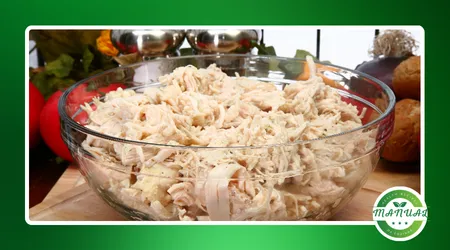
Perhaps the most frustrating mistake is discarding the broth before shredding. When the fibers open up, they become like a sponge.
If the surrounding environment is dry, it will lose water to the atmosphere, resulting in that "straw-like" appearance of the meat.
By maintaining the shredded cooked chicken in its own brothThis allows the meat to reabsorb the aromatic liquid at the exact moment the fibers are separated.
This seals in the juiciness from the inside out, ensuring a crisp finish even after reheating.
Another point is the haste in seasoning. Salting only the final dish leaves the meat with an internal "void". The salt needs to be in the cooking water so that, through osmosis, it seasons the protein all the way to the center.
High-performance preservation and freezing
For those who do meal prepGlass is superior to plastic. It doesn't retain odors and handles temperature changes better.
When storing your shredded cooked chicken in its own brothCover the surface with a little of the liquid to prevent oxidation.
In the freezer, the rule is clear: the less air, the better. Vacuum-sealed bags prevent freezer burn, which alters the flavor of the meat.
Dividing it into 200g portions prevents waste and speeds up thawing when preparing food.
Keep the stock for up to 90 days to ensure the original flavor is preserved. In a regular refrigerator, the safe storage limit is three days.
+ Homemade Fit Mayonnaise with Yogurt: Firm and Creamy
Gastronomic versatility in 2026
We live in the age of efficiency. Having high-quality protein readily available in the freezer eliminates the temptation of ultra-processed foods.
This chicken is the base for everything: from a naturally fermented sandwich filling to an impromptu Thai curry.
The great advantage of shredded cooked chicken in its own broth It's because it accepts new layers of flavor.
It doesn't clash with Mexican or Asian spices, or the classic Brazilian stir-fry; it serves as a robust and moist base for your creativity.
In the "real food" trend, this preparation shines. You have complete control over the sodium and preservatives, delivering a meal that is both practical and absolutely honest with your body.
The power of fresh herbs in the final result.
Herbs are not just for decoration. The use of bay leaf, thyme, and even a lemon peel during cooking creates layers of flavor that powdered broths could never imitate. It's an invisible sophistication, but perceptible with the first bite.
Try to finalize your shredded cooked chicken in its own broth with a touch of fresh parsley just before serving.
The residual heat from the meat releases the herb's oils, creating an impressive "freshly cooked" aroma.
Avoid easy solutions that promise instant flavor. Good cooking requires time. Appreciating the slow cooking process is an act of respect for the ingredient and for those who will consume it.
To deepen your knowledge about conscious food choices, visit the portal of Ministry of Health.
FAQ – Direct answers to real questions
Can chicken be shredded when it's cold?
You can, but it will require more work. The cold "hardens" the fiber connections. Shredding while it's still warm is what guarantees that loose, professional look we see in food photos.
Can I reuse the broth to cook rice?
Absolutely. It's one of the best uses. The rice cooked in the chicken broth absorbs all the flavor and nutrients that remained in the water, turning a simple side dish into something extraordinary.
Why did my shredded chicken turn dark?
Probably due to excessive oxidation or the use of highly pigmented seasonings like soy sauce or too much paprika. For a lighter shredded chicken color, focus on using white and green vegetables during cooking.
Can I use a blender to shred it?
Avoid this as much as possible. The blender cuts the fiber instead of separating it, resulting in a grainy, textureless chicken pulp. If you don't have a blender, use the pressure cooker method or good old-fashioned forks.
How do I know the right amount of water?
The golden rule is: cover the chicken and leave two fingers' width of water above the meat. Less than that and it can burn; more than that will ruin your chicken. shredded cooked chicken in its own broth with a diluted flavor and lacking personality.