
The Miracle Fruit is a must-have in your home, see why!
Have you heard of the Miracle Fruit? If so, do you really know that it can bring good things to your life? This post will show you how this fruit can be included in your diet.
Adverts
With the scientific name Synsepalum dulcificum, the plant has recently been gaining great fame, as it has even appeared on television programs, with the trend taking hold from Instagram posts.
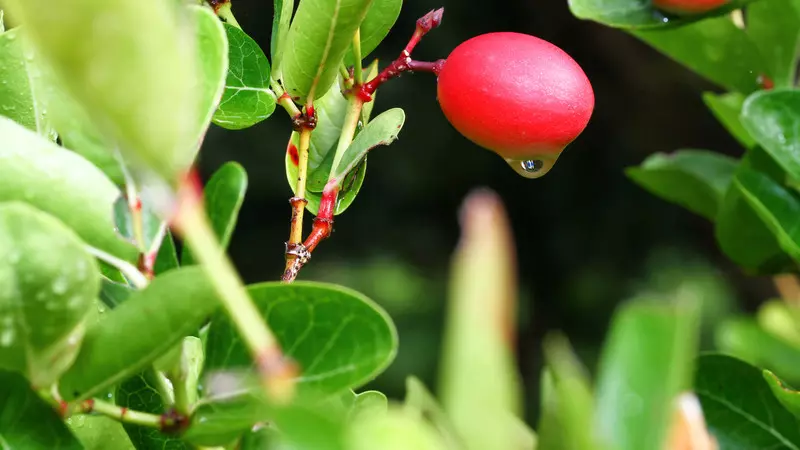
Find out where the Miracle Fruit comes from
Originating from African lands, the miracle fruit is recognized in our country only by fruit collectors and those who are curious about this type of food.
The term “miracle fruit” is given because it actually has a miraculous effect on our taste buds, by inhibiting the work of the taste buds when we ingest something citrus, for example, it makes lemon taste sweet.
Making pure lemon taste like lemon pie!
To clarify this Miracle Fruit talk, let's compare it with other fruits, such as Bilimbi and Taiti Limes and also Galego, known as galeguinho.
Adverts
Thus, explaining better the fruit and its action that occurs on the taste buds as it occurs right after tasting a single fruit, which is even the size of coffee, thus almost completely losing the power of having an acidic flavor, this is something so good that it allows you to appreciate various fruits that are sour, such as lemon and bilimbi.
Learn the tricks to growing Fruita Milogrosa
Our team will also answer common questions, such as what type of soil should be used? Can the climate affect this type of cultivation? And many others…
So, answering the question in question, it is necessary to explain that in general this fruit can be adapted to different types of soil, although it is preferable to choose soils with greater acidity.
However, there is the possibility of growing the plant in different types of soil.
In dry climates, as is the case in the Federal District, it is recommended that the miracle fruit be grown in partial shade and that care be taken to ensure that the plants do not lack water.
Stay tuned! This is a type of plant that thrives on plenty of water, but it doesn't get soaked.
A good option is small pots and a smaller plant, which makes it easier to handle and the place where the pot should be kept so that it can develop in good conditions.
Discover now more exotic fruits that you probably didn't even know existed
At this point you will learn about some exotic fruits to understand how many options there are in this world!
Snake fruit
Coming directly from India, the snake fruit, or salak as it is also known, has a skin that resembles snake skin, having a rigidity and texture.
It is necessary to peel this fruit very carefully, as the skin poses a risk of cuts. In terms of flavors, it can be described as a mixture of banana, walnut and pineapple, and the aroma is very intense.
Hala
The use of hala is fundamental in certain tropical cultures, which are fully utilized.
In addition to being consumed, their segments are often used to make handmade necklaces. The shell has a very specific rigidity and is made up of a significant number of brightly colored phalanges containing seeds.
Black sapote
Perhaps if you came across an open fruit like this, you would certainly have the impression that it was rotten, but it is this same characteristic odor that indicates that it would be ideal to consume!
Although its appearance from the inside may raise doubts, its texture and tropical taste of black sapote are very similar to that of a chocolate-flavored pudding. It makes you want to try it, right?
Buddha's Hand
Having nothing in common with others, this is a fruit that has practically no pulp. It is right in its center that resembles the lemon peel, which makes it more commonly used in salad preparations.
The Buddha's hand originates between India and China, something that, together with its “fingers” aspect, gives it this name.
Buriti-Miriti
The pulp of this fruit can be used to make drinks and delicious porridge. It is very rich in vitamin A, calcium, phosphorus and fatty acids that help delay the aging of cells in our body, thus eliminating free radicals.
Camu-camu
Camu-camu is one of the exotic fruits that contains a high concentration of vitamin C. The leaves and pulp are used to treat numerous illnesses and symptoms, such as viral infections, flu and colds, chronic fatigue, asthma, arteriosclerosis, gingivitis, headaches and many other problems.
Cranberry
This is a type of fruit that treats urinary tract infections. Drinking a glass of it in the morning, according to research, helps fight infections.
Its caloric content when consumed without sugar, cranberries have the power to generate the sensation of being full, which contributes to healthier weight loss.
Besides cranderry is also a good source of antioxidants, which prevent diseases and combat cell aging.
Granadilla
Granadilla is native to South America and contains vitamin A, phytochemicals that help reduce cholesterol and is very rich in soluble fiber, which is crucial for controlling diabetes.
However, what is curious about this fruit is that the seeds can be edible and still have a lot of nutrients.
Abiu
A fruit of Amazonian origin that is a source of vitamin A, calcium and phosphorus. Its seed has an oil with anti-inflammatory action.