
How to make your kitchen functional with just a few practical adjustments.
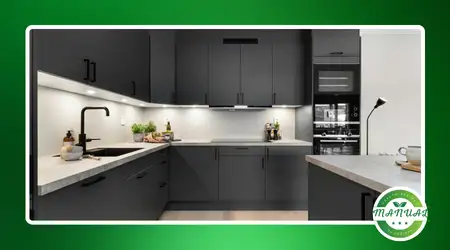
Did you know that Make your kitchen functional with just a few adjustments. Could it completely transform your daily routine and optimize your meal preparation time?
Adverts
The kitchen is the heart of the home, but a lack of organization and an inadequate layout often lead to stress and a waste of precious time.
Changing the dynamics of this environment doesn't require expensive or time-consuming renovations, but rather the application of intelligent interior design and ergonomics concepts.
Small changes in the placement of utensils and the organization of cabinets restore the practicality your daily life needs.
In this article, you will learn how to optimize your space with practical, easy-to-apply solutions based on real-world data from modern architecture.
Adverts
Get ready to discover how to improve workflow, organize closets efficiently, and apply the famous activity triangle rule.
Table of Contents
- Why does ergonomics transform the home environment?
- How to apply the work triangle rule in practice?
- What are the best organizers for small closets?
- Where should you position your appliances to optimize your time?
- How does proper lighting improve the functionality of a space?
- Comparative table of best practices
Why does ergonomics transform the home environment?
Ergonomics in interior design studies the relationship between the human body and the activities it performs in built spaces. When we apply these concepts to the kitchen, the main objective is to reduce unnecessary physical effort and mitigate the risks of serious domestic accidents.
Design studies show that, on average, a person spends more than an hour a day in the kitchen preparing food and cleaning utensils.
Therefore, if frequently used objects are out of comfortable reach, the body will suffer from micro-injuries resulting from incorrect repetitive movements.
By understanding the flow of your tasks, you discover that Make your kitchen functional with just a few adjustments. It fundamentally depends on positioning the right items at the correct height. Prioritizing accessibility at hand and eye level prevents daily physical strain during meal preparation.
Countertops that are too low or cabinets that are excessively high force poor posture and cause chronic back pain after long periods of intense activity.
Universal design seeks to create environments that adapt perfectly to users, promoting well-being, autonomy, safety, and agility for the whole family.
How to apply the work triangle rule in practice?
The concept of the work triangle was developed in the 1940s by the School of Architecture at the University of Illinois to optimize residential kitchens.
This methodology connects the three main activity areas of the room: the sink (hygiene), the stove (cooking), and the refrigerator (storage).
To apply this rule in your home, the sum of the distances between these three points should ideally measure between four and eight meters in total. Keeping the walkways clear between these three strategic zones prevents collisions and optimizes the flow of pedestrian traffic.
If your kitchen has a galley or linear layout, you can still... Make your kitchen functional with just a few adjustments. Positioning the sink centrally between the stove and the refrigerator.
This logical arrangement respects the natural sequence of food preparation: remove, wash, cut, and finally cook.
Avoid placing physical obstacles, such as large trash cans or unsuitable support tables, directly in the paths connecting these three vertices of the operational triangle.
Good circulation saves hundreds of steps a day and considerably speeds up the total preparation time of any complex recipe.
+ Babish's Kitchen Hacks to Master Basic Recipes with Confidence
What are the best organizers for small closets?
Taking advantage of the vertical volume of cabinets is the secret experts use to expand the usable area of kitchens with severely reduced square footage. Wire shelves create new internal storage levels, doubling the storage capacity for plates, cups, airtight containers, and saucers.
Adhesive hooks or brackets attached to cabinet doors are excellent alternatives for hanging pot lids, dish towels, or large serving spoons.
This simple technique frees up valuable drawer space and keeps frequently used utensils within easy reach.
Rotating organizers, known internationally as Lazy SusansThey work very well in the deep corners of closets, places that often become dead zones that are difficult to access.
By rotating the base, you can quickly see and reach all the spices, sauces, or oils stored at the bottom.
Also invest in square or rectangular airtight containers to store dry goods in the pantry, as they take up less space than the original plastic packaging.
To understand how these organizational concepts positively impact residential architecture and urban life, you can consult the guidelines of... Project Magazinewhich details the evolution of functional design.
Implementing these small storage solutions allows Make your kitchen functional with just a few adjustments. without the need to order expensive new custom-made furniture.
Intelligent organization categorizes items by frequency of use, ensuring that daily chaos disappears permanently.
Where should you position your appliances to optimize your time?
The placement of appliances on the countertop determines whether your kitchen workflow will be efficient or full of annoying interruptions.
Appliances used daily, such as coffee makers and toasters, should be placed in fixed locations near electrical outlets, avoiding long, stretched cords.
Heavy equipment or equipment used sporadically, such as powerful blenders, stand mixers, and large food processors, should be stored in low niches or lower cabinets that are easily accessible. Lifting heavy objects above shoulder level creates ergonomic risks and unnecessary accidents.
Create themed stations on the countertop, such as a "coffee corner" or a "baking station," bringing together appliances and their respective supplies and accessories in the same place.
This spatial proximity prevents you from having to walk back and forth picking up scattered items.
Make sure to maintain a free countertop area of at least 60 centimeters next to the stovetop and microwave oven to safely support hot dishes.
Organizing the workflow in this way helps to Make your kitchen functional with just a few adjustments. Very simple operations to perform.
How does proper lighting improve the functionality of a space?
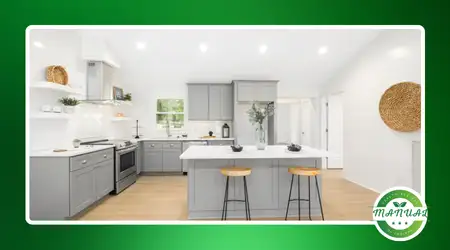
Centralized ceiling lighting often creates uncomfortable shadows in the work area when you position yourself facing the main cutting table.
To correct this design flaw, install LED strips with neutral or cool light attached just below the upper wall cabinets.
Directly illuminating the work surface increases safety when handling sharp knives and facilitates precise visualization of the cooking point of food.
Choose light bulbs with a high Color Rendering Index (CRI) to preserve the true colors of fresh and cooked ingredients.
Directional pendant lights work very well above central islands or breakfast tables, creating a welcoming atmosphere and visually defining the different zones of the kitchen.
Proper lighting significantly reduces eye strain after long periods of focused and meticulous work.
Installing independent switches for each lighting circuit allows you to control the light intensity according to the specific activity being performed at any given moment.
Understanding these technical factors helps to Make your kitchen functional with just a few adjustments. Lighting designs that enhance aesthetics and increase overall comfort.
+ Utensils that replace several items in the modern kitchen.
Comparative table of best practices
Below, we present a structured table with practical interior design data, demonstrating the improvements achieved by making small modifications to the organization of your kitchen.
| Problem Found | Suggested Practical Adjustment | Real Impact on Daily Life |
| Plates stacked by size | Use of vertical wire racks | Gain of 50% of usable cabinet space. |
| Spices lost at the back of the cupboard | Swivel base installation (Lazy Susan) | Reducing ingredient search time |
| Knives taking up space in the drawer. | Attaching a magnetic bar to the wall | Increased safety and speed in cutting. |
| Shadows on the workbench | LED strip installation under the cabinet | Improved visibility and safety during handling. |
| Pots that are hard to reach | Use of lid organizers/dividers | Elimination of noise and scratches on parts. |
Reflective Closing
Transforming the dynamics of the culinary environment doesn't require significant financial investments or complex structural renovations that close the house for weeks on end.
Focusing on basic ergonomics, intelligent placement of appliances, and the strategic use of interior organizers solves most chronic space problems.
By applying the concepts presented, you will notice a significant reduction in the time spent preparing meals and cleaning your home environment daily.
The secret lies in consistency and the logical organization of objects according to your family's specific routine.
Try starting by modifying just one drawer or installing an LED strip on your work surface to test the immediate benefits in your routine.
Certainly, you will find that you can. Make your kitchen functional with just a few adjustments. It's a completely realistic, practical, achievable, and transformative goal.
To deepen your understanding of the impact of design and architecture on the functionality of residential spaces, it is worthwhile to follow the technical publications of [website/organization name]. ArchDaily Brazil, the world's largest architecture portal.
Start making small changes today and enjoy a much more harmonious, practical, and inviting space.
+ Babish's Kitchen Hacks to Master Basic Recipes with Confidence
FAQ – Frequently Asked Questions
What is the best height to install wall shelves in the kitchen?
The ideal height for the base of upper cabinets or overhead shelves varies between 1.35m and 1.50m in relation to the finished kitchen floor.
This measure ensures that adults of average height can reach the basic items on the top shelf without needing to use stools or ladders.
How to organize a small American-style kitchen with limited resources?
Prioritize the use of wall-mounted organizers to free up work surfaces and keep the dividing countertop completely clean and unobstructed.
Use matching organizing baskets to group similar items and maintain visual harmony integrated with the adjacent living room.
Is it worth using adhesive hooks to hang heavy utensils?
High-performance adhesive hooks can support considerable weight, provided you strictly adhere to the load limit indicated by the manufacturer on the product packaging.
Avoid hanging heavy cast iron pans or skillets on these racks; instead, use them for skimmers, silicone spatulas, and lightweight dish towels.
How can I keep my plastic containers organized in the long term?
Store plastic or glass containers stacked by shape (squares with squares, rounds with rounds) and store all lids in a separate organizer.
Discard immediately any containers that are damaged, stained, or have lost their lids due to daily use.