
6 curious facts about cassava and its consumption
In this text, you will find 6 curious facts about cassava and its consumption in Brazil
Adverts
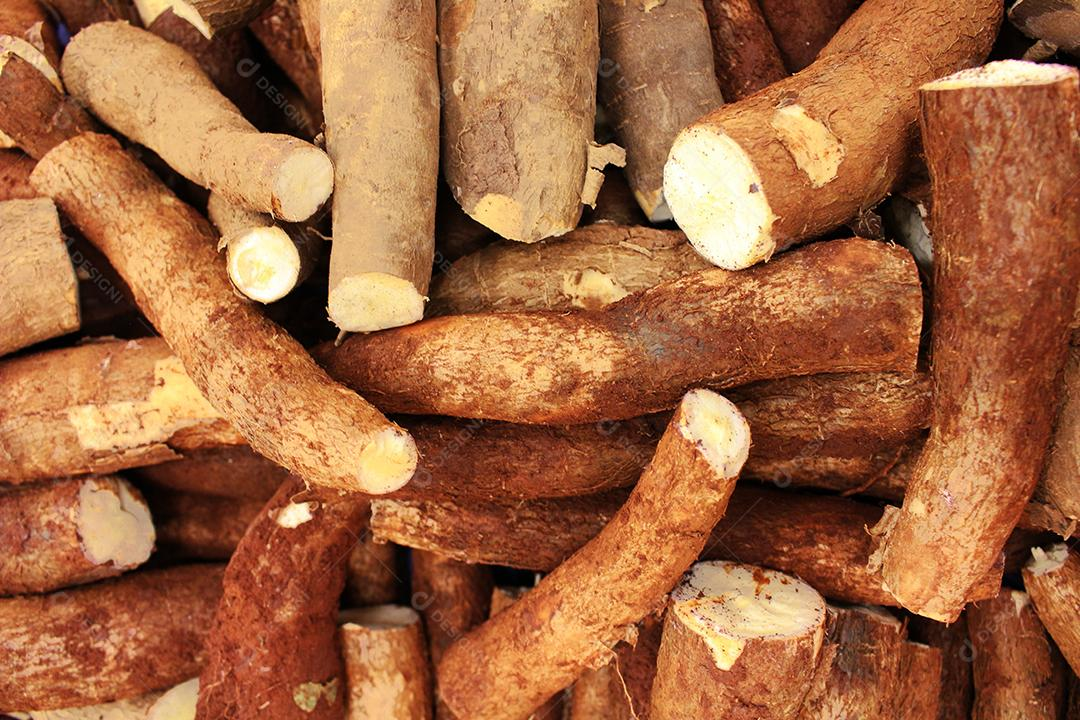
Cassava, also known as cassava or cassava, is a strong Brazilian plant that can tolerate periods of drought well, in addition to excelling in low fertility soils, which ends up being advantageous in some regions.
It can be grown throughout the country and is great for food, in addition to being very nutritious and having a high energy value, starch and some minerals.
Knowing this, we will describe to you some interesting facts about cassava and the importance of its consumption.
For this reason, pay attention to the facts that we will leave here, since Brazil is the fifth largest cassava producer in the world, which is a very important fact and number for our country.
Adverts
6 curious facts about cassava
1. Rich in nutrients and gluten-free
Carbohydrates are the main nutrients in cassava, with amylopectin and amylose, which help provide an even greater amount of energy. This makes it great for those who are exercising or even on diets.
One hundred grams of cooked cassava provides 159 calories, which is quite a lot compared to other types of plants.
The presence of gluten in cassava is almost zero, which ends up being accessible even for people who are more lactose intolerant.
It also contains little glucose, making it a good option for people suffering from diabetes. This is a interesting fact about cassava and its consumption ends up being a healthy option for anyone.
2. There are different nicknames and it is adaptable to different climates
For each region, there are different nicknames for cassava and they are usually called: Aipi, aipim, castelinha, ipim, macamba, cassava, macaxera, manioc-brava, cassava-doce, cassava-mansa, maniva, maniveira, mucamba, bread -de-pobre, tapioca, uaipi.
They are all different names we give to cassava, which is a curious and interesting fact about cassava.
Remembering that cassava is a plant from the Eufhobiacea family of South American origin, having been cultivated since ancient times by the people of that continent.
Cassava can adapt very well to the climate and any Brazilian region, as its planting is favorable in all tropical and subtropical climates, and this means that it develops quickly.
The opposite is not a good option, as it does not develop well in colder climates.
3. Types and production
According to Embrapa, it is stated that there are around 250 varieties of cassava.
One of these species is brava, which has a high content of hydrocyanic acid, a toxic compound, and must be subjected to specific drying techniques in order to be consumed by people.
Now the most consumed in Brazil is the tame species, which is the one chosen by BeijuBom to manufacture all the products in the line.
It is often found in markets, fruit and vegetable stores and supermarkets.
The gentle species has a high vitamin content and is ideal to include a portion of 150 grams if you want to follow a daily diet.
Cassava is also the 10th most produced food in the world, with more than 95 million tons produced per year. Current Brazil is the 5th largest producer, with around 23 million tons per year and this makes it a Curious fact about cassava.
4. Legend
A certain legend says that cassava originates from the early death of Mani, who is the granddaughter of the leader of a tribe, buried in the hollow where he lived and, after some time passed, a plant grew in the place where the body was buried. That plant was cassava.
The indigenous people observed the white root and gave the name Manioca, and, for the plant, the name Maniva.
This legend is a interesting fact about cassava which, by coincidence of fate, ended up becoming known in some regions as a plant that brings bad omens.
5. Produces tapioca through cassava starch
Tapioca It tastes really good, doesn't it? Did you know that tapioca is a derivative of cassava? Well, that's a very curious and interesting fact about this plant.
Tapioca is a type of flour that is highly consumed in the Northeast. It is made from cassava gum.
With it you can make several delicious recipes, such as fried cubes for appetizers, sandwiches similar to French crepes with various fillings and even sweets, such as tapioca pudding.
There are so many recipe possibilities that it's difficult to choose one that makes your mouth water. This is due to the existence of cassava, which makes it a great option for production.
In addition to producing tapioca, you can also make tapioca balls. If you are interested in doing it, just access the revenue on our website.
6. Excellent for strengthening bones and tissues
There are many benefits that consuming cassava provides for your health, as it is rich in fiber, potassium, calcium and iron, helping to maintain the composition and health of bones.
Cassava also produces a lot of collagen, which can be important for cartilage and even tissues in general.
Other interesting fact about cassava is that it serves as a moisturizer to hydrate the skin and even the hair, preventing dry hair, as well as preventing split ends and controlling frizz.
+ Tapioca couscous: learn a delicious and easy-to-make recipe, no need to bake!
How is cassava consumed in Brazil?
According to the most recent estimates from the Brazilian Institute of Geography and Statistics (IBGE), cassava production in Brazil has been growing significantly in recent years.
In 2023 it grew by 1.3% compared to 2022, reaching a total of 18.4 million tons. This increase is due to the appreciation that this type of food is receiving more and more.
This is good, as cassava brings several benefits to humans, in addition to being cheap.
Anyway, these are some interesting facts about cassava and the importance of its consumption in Brazil.
As you can see, it is a very important plantation that has been even more valued lately.
If you liked our content, follow us for more information like this.
We thank you in advance for your attention.