
Cooking with kids: ideas to get little ones involved
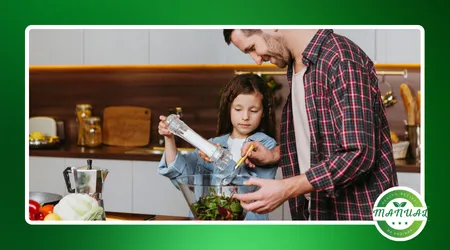
Cooking with children It's much more than just preparing a meal; it's an adventure that nourishes the body and mind. It's in the kitchen that little ones explore textures and aromas.
Adverts
Involving children in food preparation is a learning opportunity. It strengthens family bonds and establishes a healthy relationship with food.
The kitchen becomes a laboratory of discovery and creativity. It's where children develop motor skills and coordination.
Plus, she learns about measurements and fractions in a fun way. It's a space to create lasting memories. This shows that food is a shared experience.
Turning Preparation into Fun
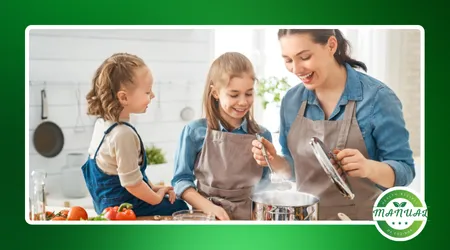
The kitchen may seem like dangerous territory for parents, but with supervision and the right tools, fun is guaranteed.
Adverts
Safety comes first. Let your child wash fruits and vegetables in the sink, for example. This makes them feel useful.
She can mix the ingredients with her hands or a spatula. Children can help shape cookies or decorate cakes.
Allowing your child to participate right from the moment they choose the menu increases their interest. Ask for their opinion on what to eat. This makes them feel part of the process.
Children can help choose ingredients at the supermarket. This introduces them to the world of mindful eating.
This active participation can transform a previously rejected dish into a desired meal.
++ How to calculate ideal portions for lunch and dinner
Learning Beyond the Recipe
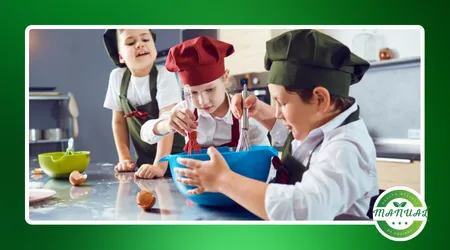
The kitchen is a school of life in disguise. There, children learn about food chemistry, for example.
They watch the dough rise and the vegetables change color as they cook. Patience is practiced as they wait for the bread to bake.
Organization is practiced when arranging ingredients and utensils.
Math also enters the picture naturally. By measuring flour and sugar, children understand the concept of proportion.
When dividing dough to make bread, she learns about fractions. All this in a fun way, without the pressure of the classroom.
This type of concrete learning cements knowledge. Cooking teaches teamwork and collaboration.
++ Organize your fridge: where to store each type of food
Practical Ideas for Getting Kids Involved in the Kitchen
Start with simple, safe recipes. Making sandwiches is a great place to start, for example. Your child can choose the fillings and assemble their own snack.
Homemade pizza is another guaranteed hit. Kids can roll out the dough and add sauce and toppings. Participating in the assembly is the most fun part.
Another fantastic idea is to make fruit skewers. Kids love the freedom to choose their own fruit. They can place the fruit on the skewers.
It's a preparation that requires little supervision and offers a healthy snack. Plus, making muffins simply is great.
Kids can mix the dry and wet ingredients. Fun is guaranteed.
An interesting analogy: the role of the adult in the kitchen, alongside the child, is like that of the gardener alongside a tiny seed. The gardener doesn't force the plant to grow.
Instead, it provides the right conditions: good soil, water, and light. Likewise, the adult provides security and the right tools.
The adult guides the process. They allow the child to explore and flourish at their own pace, without pressure. This way, the child develops their own relationship with food.
++ How to creatively reuse leftover food
Benefits that Extend from Cooking to Life
Children's participation in the kitchen has a significant impact on their future eating habits.
According to a 2021 study in the Journal of Nutrition Education and Behavior, children who cook at home tend to consume more fruits and vegetables.
They are also less likely to eat fast food. The study showed that the experience of cooking with children helps them make healthier food choices.
Exposing them to different foods in a positive way makes them more open to trying them.
Table 1 shows examples of tasks suitable for different age groups, making the process inclusive and safe.
Cooking Tasks by Age Group
| Age (Years) | Examples of Safe Tasks |
| 2-3 | Wash fruits and vegetables, mix ingredients in a bowl, place parchment paper in the pan. |
| 4-5 | Beat eggs, mash soft fruit, use cookie cutters, toss salad. |
| 6-7 | Measuring ingredients, cracking eggs, decorating cakes and cookies, assembling sandwiches. |
| 8-9 | Peel vegetables with a children's peeler, slice bread with a plastic knife, use a blender with supervision. |
| 10+ | Cut vegetables with a real knife (under supervision), use the stove with the help of an adult. |
++ A child's place is in the kitchen if you follow the tips and recipes
These examples show that it's possible to engage children progressively. With each step, they gain more confidence and develop new skills.
Another original example: My 6-year-old nephew initially turned his nose up at broccoli.
After he helped me wash and separate the broccoli into florets, and helped me put it in the steamer, he ate it without complaint and with a smile on his face.
He not only ate, but also took pride in having prepared one of the dinner's ingredients. That kind of experience is transformative.
Cuisine is also a form of cultural expression.
Creating Delicious and Meaningful Memories
The experience of cooking with children creates an environment of cooperation. The child learns to work together to achieve a common goal.
These memories of teamwork are valuable for development. The result is always a delicious meal. More than that, it's a fond memory.
The kitchen becomes the heart of the home, a place of warmth and affection.
The smell of cookies baking and the mess of flour on the counter become synonymous with happy moments.
Cooking with children It's more than an activity; it's an act of love. A 2023 study showed that 85% of parents who regularly cook with their children report better family communication.
This statistic underscores the importance of these moments.
Furthermore, the kitchen is a space for nutritional education. Children learn about the origins of food and the importance of a balanced diet.
Involving children is an effective strategy to combat food selectivity.
Why would a child who helped plant a tomato in the backyard and harvest it for a salad eat it with more enthusiasm than if the tomato had simply appeared on his plate?
Conclusion
The kitchen is a powerful tool for a child's holistic development. It offers valuable lessons.
Creativity, patience, mathematics and teamwork are taught in a practical way.
Children's participation in the kitchen strengthens family bonds and promotes healthy eating habits.
Cooking with children It's an investment in their future. It's a gift of cherished memories. Cooking is a delicious journey.
Frequently Asked Questions
What is the ideal age to start cooking with my child?
From the age of two, children can perform simple tasks, such as washing fruit or mixing ingredients. The most important thing is to adapt the activities to your child's age and ability, always with supervision.
How to ensure safety in the kitchen with children?
Use plastic knives, safe cutting boards, and age-appropriate tools. Keep children away from the stove and hot appliances. Always closely supervise all activities.
What to do if the child doesn't want to eat what he helped to prepare?
Don't force. Praise effort and participation in the preparation, regardless of the outcome. Gradual and positive exposure to foods, without pressure, is key to children accepting new flavors.
What types of recipes are best to start with?
Simple recipes that don't require a lot of preparation time are the best.
Cookies, homemade bread, pizzas, and fruit salads are great options because they offer lots of fun steps for kids to take part in.
How to make the educational experience and not just a mess?
Mess is part of the process, but it can be minimized with organization. When cooking, talk about textures, colors, and smells.
Explain why the ingredients are mixed and what will happen when they are cooked.