
How to make homemade vegetable broth

O homemade vegetable broth is the essence of smart cooking.
Adverts
While the market offers quick options full of additives, preparing your own broth guarantees control over the ingredients, intensifies flavors and reduces waste.
According to the Pan American Health Organization (PAHO), 74% of industrialized broths contain alarming levels of sodium, often exceeding the recommended daily intake in a single serving.
But what makes the homemade vegetable broth so special? In addition to being free of preservatives and artificial enhancers, it transforms peels, stems and leaves into a nutritious and versatile liquid.
Imagine a cooking base that not only serves as a base for soups and sauces, but also enhances dishes with minerals, vitamins and natural umami.
Adverts
Here, you will discover professional techniques, surprising combinations and tips to extract maximum flavor and nutrition.
From slow cooking to using unusual ingredients, every detail makes a difference. We go beyond the basic recipe: this is a complete guide to mastering the art of homemade broth.
Why is Homemade Vegetable Broth Superior?
The first advantage of homemade vegetable broth is purity. While industrialized versions rely on monosodium glutamate and flavorings, homemade versions use only fresh vegetables, herbs and spices.
A study published in the Journal of Culinary Science & Technology (2024) showed that artisanal broths have up to 3x more bioactive compounds, such as polyphenols and flavonoids, which strengthen the immune system.
Another benefit is savings. Carrot peels, parsley stalks and even pumpkin seeds, which would normally go to waste, can be boiled to extract nutrients.
This not only reduces waste, but also lowers costs. One example? A single bunch of parsley, with its bitter stems and fresh leaves, can yield a vibrant broth, perfect for risottos and creams.
++Marble cake recipe that mixes vanilla and chocolate in just the right amount
And let's not forget the flavor. When you control the ingredients yourself, the result is more balanced. Want a sweeter broth? Add more carrots and caramelized onions.
Prefer an earthy touch? Mushrooms and leeks work wonders. The versatility is endless.
The Science Behind Perfect Flavor
The secret of a homemade vegetable broth exceptional is in chemistry. The Maillard reaction, which occurs when vegetables are roasted before cooking, creates complex aromatic compounds.
This explains why a broth made with roasted onions has a deeper flavor than one made with just raw vegetables.
Temperature is also crucial. Cooking at a low heat (between 75°C and 85°C) preserves heat-sensitive nutrients, such as vitamin C and some digestive enzymes. However, boiling at a high temperature can make the broth cloudy and bitter.
For a clear, tasty liquid, strain through a cotton cloth or use egg white clarification, a common technique in professional gastronomy.
++Recipes for those who live alone and want practicality
An interesting fact: A report from University of Sao Paulo (USP) showed that broths made with vegetable peels retain up to 40% more fiber than those prepared with just the pulp.
This means that, in addition to the flavor, you get a nutritional boost.
Advanced Techniques for a Flawless Broth
1. Roast Vegetables Before Cooking
Roasting onions, carrots, and garlic in the oven before adding them to the pan intensifies their flavor. The natural caramelization of the vegetables’ sugars creates a richer flavor profile with toasty, umami notes.
2. Use Unusual Ingredients
Sweet potato peels, cauliflower stalks and even pumpkin seeds can be used. These parts, which are normally discarded, concentrate nutrients and give the broth its character.
++How to make well-seasoned, full-bodied beans
3. Natural Clarification
For a crystal clear broth, like those used in fine cuisine, add beaten egg whites while heating. The proteins coagulate and “clean” the impurities.
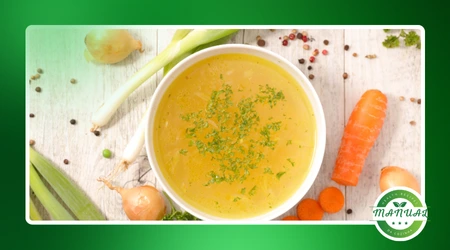
The Environmental Impact of Homemade Broth: Sustainability in Practice
In addition to the nutritional and gastronomic benefits, the homemade vegetable broth is an ecologically conscious choice.
The production of industrialized broths involves long transport chains, plastic packaging and energy-intensive processes.
By making your own broth, you significantly reduce your carbon footprint.
A report by the Akatu Institute (2025) showed that families that adopt the habit of making full use of food reduce the volume of organic waste generated by up to 30%.
It is also worth highlighting the social aspect of this practice. By using unconventional parts of vegetables – such as peels, stems and leaves – you value the work of farmers, who often discard these items due to lack of market.
Many communities have networks for sharing these noble “leftovers” to produce community broths, a trend that has been growing in large cities such as São Paulo and Belo Horizonte.
Adapting the Broth to Specific Needs
For those who follow restrictive diets, the homemade vegetable broth offers endless possibilities for adaptation.
People with gluten intolerance can use the broth as a safe base for creams and soups, since industrialized versions often contain wheat derivatives.
Diabetics can control their carbohydrate profile by opting for less sugary vegetables, such as zucchini and eggplant, instead of excessive beets and carrots.
Athletes and those who practice physical activities can also enhance the benefits of the broth. Add an extra pinch of pink Himalayan salt or adaptogenic herbs how ashwagandha turns broth into a natural isotonic drink.
Sports nutritionists have recommended the consumption of post-workout broth due to the ideal combination of electrolytes and essential amino acids for muscle recovery.
Frequently Asked Questions About Homemade Vegetable Broth
1. How long does homemade broth last in the fridge?
In an airtight container, up to 5 days. For longer shelf life, freeze for up to 3 months.
2. Can I use frozen vegetables?
Yes, but the flavor will be less intense. Choose fresh vegetables for a more aromatic result.
3. How to replace salt without losing flavor?
Herbs like rosemary, thyme, and bay leaves add depth. A little miso or soy sauce also helps.
Conclusion: A Broth That Transforms Cooking and Health
Prepare homemade vegetable broth is an act of resistance against industrialized food. Each cup carries nutrition, authentic flavor and environmental awareness.
Whether it’s a comforting soup, a creamy risotto, or a sophisticated sauce, this golden liquid is the foundation for smarter cooking.
Experiment. Start with the basics, then experiment with new combinations. The best broth isn’t on the supermarket shelf — it’s in your pot.