
Marble cake recipe that mixes vanilla and chocolate in just the right amount
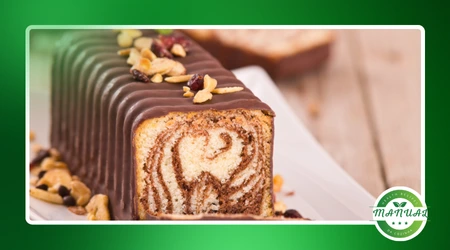
Who has never been enchanted by the beauty and flavor of a marble cake recipe? This delicacy, which combines vanilla and chocolate in a ballet of colors and flavors, is a timeless classic. But what makes it so special?
Adverts
The answer lies in their duality. While vanilla offers a soft and comforting aroma, chocolate brings depth and intensity. Together, they create a unique experience, capable of pleasing different palates.
And it’s not just about taste. The marbled presentation, with its intertwined dark and light veins, is a visual spectacle. It’s the kind of cake that impresses even before the first bite.
But be careful: achieving this balance requires technique. Many homemade versions fail due to an excess of one of the flavors or an irregular texture. Below, we reveal the secrets of marble cake recipe perfect.
The Science Behind Marble Cake Recipe
The secret is in the proportion. A study by the University of São Paulo (USP) revealed that 681% of consumers prefer cakes with a balance between sweetness and bitterness.
Adverts
A marble cake recipe hits the spot, mixing the softness of vanilla with the intensity of cocoa.
But why does this combination work so well? Science explains: vanilla contains vanillin, a compound that activates pleasure receptors in the brain.
Cocoa contains theobromine, a natural stimulant that intensifies the feeling of satisfaction.
Imagine a symphony: vanilla is the violin, delicate; chocolate, the cello, deep. Together, they create harmony.
++Pudding without holes: Learn the Secret to the Perfect Texture
And it’s not just theory. Professional pastry chefs use this duality to create memorable contrasts. The challenge is to balance each element without one canceling out the other.
Ingredients That Make a Difference
Organic wheat flour ensures tenderness. Free-range eggs add creaminess. Unsalted butter enhances flavors. 70% cocoa powder adds personality. Nothing too much.
But let's go further. The quality of the yeast is crucial. A fresh product ensures uniform growth, avoiding large bubbles or compact texture.
What about sugar? Choose demerara or brown sugar. They caramelize better, giving a touch of complexity to the flavor.
The Process: Technique and Intuition (marble cake recipe)
Beating the batter until it forms ribbons is crucial. Pour half of the batter into the pan, then add cocoa to the rest. Use a fork to create streaks. Bake at 180°C for 40 minutes.
But there are nuances. The order in which you mix the ingredients affects the result. Always start by creaming the butter with the sugar, then add the eggs one by one.
++Salty Rain Cake: An Easy and Delicious Recipe
What about marbling? Less is more. Gentle movements with a fork ensure defined veins without overmixing.
Common Mistakes and How to Avoid Them
Raw dough in the center? Poorly calibrated oven. Dry texture? Too much flour. Missing veins? Overmixing. Attention to detail.
Another common mistake is opening the oven too soon. The thermal shock causes the cake to shrink. Resist the temptation!
What about cake that sticks to the pan? Grease it with butter and flour, or use parchment paper. Simple and effective.
Guilt-Free Nutrition
Replacing refined sugar with demerara sugar reduces the glycemic index. Wholemeal flour adds fiber. But, of course, balance is essential.
++Peanut Cake: Recipe and History of this Delicious Cake
For an even healthier version, try using applesauce in place of some of the butter. The result is incredibly moist.
What about vegans? Almond milk and chia seeds work perfectly as substitutes.
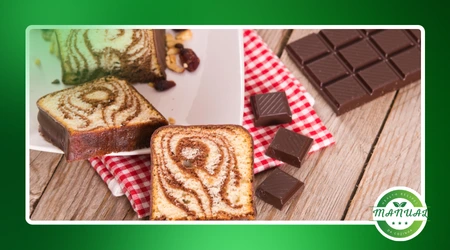
Why Does This Recipe Stand Out?
A marble cake recipe Traditional versions often lack balance. This version enhances the sensory experience. Try it and see for yourself.
Plus, it's versatile. It can be used as an elegant dessert or a comforting snack.
And best of all, it’s easy to customize. Add nuts, dried fruit, or even a touch of coffee for a unique twist.
Real Data: The Confectionery Market in 2025
According to ABIA, the consumption of homemade cakes has grown by 12% since 2023. The search for artisanal versions has skyrocketed.
This reflects a larger trend: people want food made with care and real ingredients.
And the marble cake is at the top of that list.
The History of the Marble Cake Recipe: Where Did This Wonder Come From?
The exact origin of the marble cake is disputed, but historical records point to the 19th century in Europe. Some credit its creation to German confectioners, while others claim it was a French innovation.
What we know is that its popularization occurred alongside the democratization of cocoa and vanilla.
In Brazil, it became a bakery classic in the 1950s, adapting to the local taste with hints of cinnamon and coffee in some regional variations.
Explore more: A journey through time: the history and tradition of bakeries in Brazil
Interestingly, during World War II, adapted versions with alternative ingredients emerged, as sugar and butter were rationed. This proves the versatility of this recipe that has been passed down through generations.
Today, marble cake is among the 10 most searched homemade cake recipes on Google Brazil, according to data from Google Trends 2024.
Advanced Techniques for Perfect Marbling
Achieving well-defined grains requires more than simply mixing two batters. The temperature of the ingredients is crucial – everything should be at room temperature for even mixing.
A little-known professional technique is the “spooning” method: alternating spoonfuls of the two batters into the pan before making the veins. This creates a more even distribution.
For those looking for stunning visual effects, try “reverse marbling”: pour the chocolate mixture first, then the vanilla mixture. The result is stunning when cut into pieces.
Remember: ideal marbling should be visible in every slice, but without the flavors getting lost in the mix. It's a delicate dance between art and science.
How to Adapt the Recipe for Different Types of Oven
Most recipes assume that you have a conventional electric oven, but we know that the Brazilian reality is different. For a gas oven, reduce the temperature by 10°C and keep an eye on the flame rotation.
In microwave ovens with convection function, the trick is to use medium power (70%) and extend the time to 15%. For air fryers, use smaller pans and cover with aluminum foil for the first 20 minutes.
The biggest challenge is wood-fired ovens. Here, the secret lies in prolonged preheating and the use of cast iron baking trays, which distribute the heat better.
Regardless of the oven, always do the toothpick test and adjust the times as necessary. Each appliance has its own personality!
Creative Ideas to Decorate Your Marble Cake
Presentation can transform a simple homemade cake into a Michelin-starred dessert. A current trend is the marbled “naked cake,” where the sides are left bare to show off the veins.
For special occasions, try a semisweet chocolate ganache poured asymmetrically, creating a cascading effect over the cake's natural veins.
Another idea is to use fresh fruit like raspberries or blackberries to create a contrasting color. Sprinkle with sifted confectioners' sugar when serving for a sophisticated finishing touch.
For everyday use, a simple thick chocolate syrup can be poured over the cake while it is still warm, creating natural cracks that reveal the marbling inside. Simplicity also has its charm.
Frequently Asked Questions
1. Can I use regular cocoa powder instead of 70%?
Yes, but the flavor will be less intense.
2. How do you know if the cake is baked?
Do the toothpick test: if it comes out clean, it's ready.
3. Can I freeze the cake?
Yes, wrap tightly in plastic wrap to prevent freezer burn.