
How to blanch vegetables without losing color and nutrients during cooking.
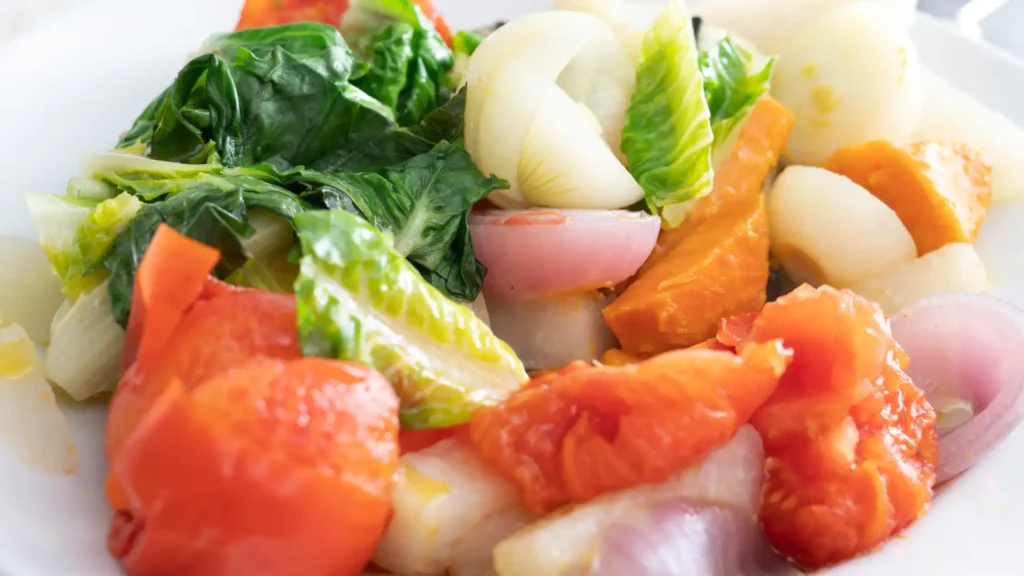
How to blanch vegetables It's not just a preservation trick, but a rescue of the technical rigor that separates amateurism from truly efficient and nutritious cooking.
Adverts
We often ignore the fact that residual heat is a silent enemy, capable of transforming a vibrant vegetable into something pale and lifeless in just a few minutes of distraction.
Mastering this method allows you to disrupt the biological clock of foods, preserving textures and vitamins that would otherwise be lost at the bottom of a forgotten refrigerator drawer.
Table of Contents
- The science behind enzyme inactivation.
- Practical guide: How to blanch vegetables with absolute precision.
- Timing table: The limit between the correct point and the error.
- Why thermal shock is at the heart of the technique.
- Nutritional preservation from the perspective of 2026.
- Storage strategies and technical FAQs.
What happens inside the vegetable during blanching?
Contrary to what many believe, blanching is not about cooking quickly; it is a chemical stabilization process that directly attacks the enzymes responsible for oxidation.
When we neglect this step, substances like peroxidase continue to act even at sub-zero temperatures, resulting in that metallic taste and rubbery texture that discourages any healthy diet.
Adverts
By understanding how to blanch vegetablesBy creating a physical and chemical barrier, you ensure the food is preserved. The initial heat sanitizes and sets the color, while the subsequent cold seals its fate.
The obsession with thermal shock: Where most fail
There's something almost therapeutic about watching the green intensify under hot water, but the danger lies in the thermal inertia that destroys the food from the inside if left unchecked.
An ice bath is not optional; it needs to be aggressive to ensure that the center of the vegetable stops cooking instantly, preserving the integrity of the vegetable fibers.
If the cooling water temperature rises too high, the process fails. It's a game of extremes where how to blanch vegetables It demands that you be quick and ruthless with the clock.
How to blanch vegetables: The step-by-step guide without distractions.
Start with standardization: uneven cuts result in conflicting textures. Uniformity in size ensures that each piece receives the same amount of thermal energy simultaneously in the pan.
Heat the water until the bubbles are steady and vigorous. Forget the salt if you plan on freezing it; it tends to dehydrate the vegetable during the months of cold storage.
Submerge the ingredients and feel the immediate color change. Time is your only guide now, and every second counts in defining the final result. how to blanch vegetables with technical excellence.
As soon as the alarm sounds, transfer to ice packs immediately. Use a wide skimmer, avoiding carrying hot water to the constantly cooling container.
Drying is the final step and perhaps the most underestimated of all. Surface moisture means ice crystals, which act like microneedles piercing the cellular structure of the food.
The secret of how to blanch vegetables It ends with a touch: the vegetable must be cold, dry, and visually flawless before any attempt at packaging it for the freezer.
+ Professional flambéing tips that don't work in the home kitchen.
Real-time table for success (Data 2026)
| Vegetable | Boiling Time | Ideal State |
| Broccoli (florets) | 3 minutes | Structural firmness and neon green |
| Carrots (slices) | 2 minutes | Flexibility without fiber loss. |
| Asparagus | 2 to 4 minutes | Waxy shine and crispness |
| Cauliflower | 3 minutes | Preserved white opacity |
| Whole Pod | 3 minutes | Absence of residual bitterness. |
| Spinach (leaves) | 1 to 2 minutes | Instant volume sealing |
The nutritional impact and the myth of vitamin loss.
Many argue that boiling water strips away nutrients, but the reality is that prolonged storage of raw vegetables is far more harmful to our health.
Bleaching seals in the B complex and vitamin C, minimizing oxidation that would naturally occur. It's a fair trade-off between minimal loss and total preservation.
To know how to blanch vegetables It's about being sure that the food on your plate, three months from now, will have more nutritional density than a tired, "fresh" product from the shelf.
For more technical information on security and international processing standards, please refer to the guidelines of Food and Agriculture Organization of the United Nations (FAO) They are the gold standard.
Texture and flavor: Where technique meets gastronomy.
A well-blanched vegetable retains that resistance to the bite that makes chewing enjoyable. It's the difference between a functional meal and a high-level gastronomic experience.
Delicate ingredients, such as zucchini, get a new lease on life. They no longer release that excess water in the sauté, keeping the sauce rich and the dish visually appealing.
Master how to blanch vegetables It allows you to play with contrasts. The freshness is "paused" in time, waiting only for the final heat of preparation to awaken again in your mouth.
+ How to preserve homemade bread for longer
Mistakes that condemn your vegetables to the trash.
The most common mistake is overcrowding the pot. If the water stops boiling when you add the vegetables, you're not blanching; you're simmering.
Ignoring the cooling time is equally fatal. The vegetable needs to remain on ice for the same amount of time it was in the heat for the thermal core to stabilize.
The rush to learn how to blanch vegetables It often takes its toll on the flavor. Poorly dried vegetables develop freezer burn, resulting in dark spots and a musty, old refrigerator taste.
Strategic storage: The end of household waste.
Use vacuum-sealed packaging or high-density airtight bags. The less oxygen in contact with the vegetable, the longer its nutrients will last.
Labeling with dates is a matter of organization and food safety. Properly handled vegetables can be frozen for up to a year, although ideally they should be consumed within six months.
When planning how to blanch vegetablesConsider individual portions. This avoids the thawing cycle that compromises the biological safety and texture of the stored vegetable fibers.
Chemical science in your everyday kitchen
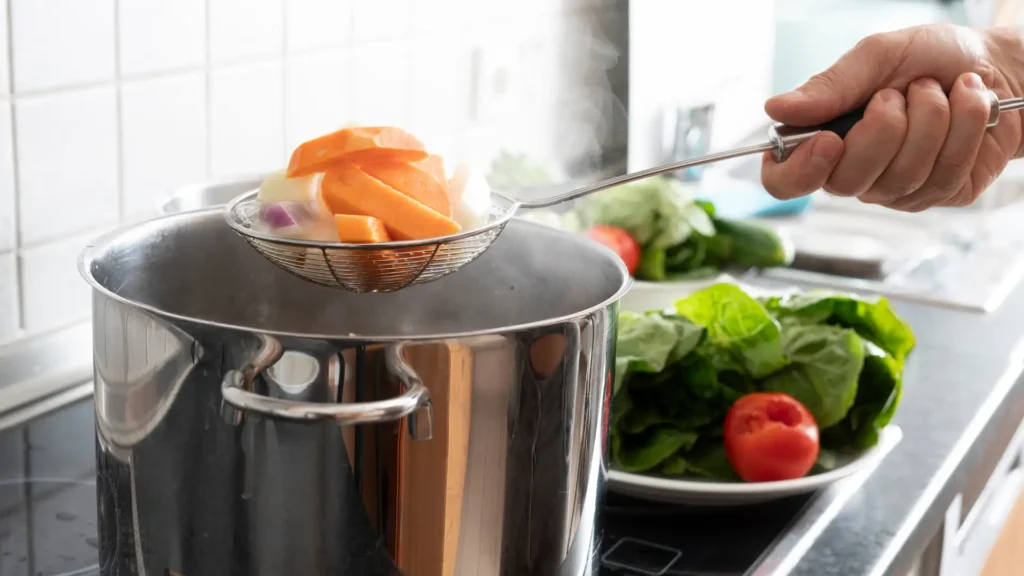
Understanding the chemistry behind heat is what distinguishes a cook from someone who simply follows recipes. Blanching is pure molecular manipulation in favor of taste.
Water acts as a conductor of this energy, while ice acts as the necessary brake. Without this balance, the biology of the food follows its natural course of decomposition.
If you want to explore more about how molecules react to thermal processing, the portal ScienceDirect It offers in-depth studies on the stability of antioxidants after bleaching.
Completing the technical cycle
Blanching requires patience and respect for natural processes. It's a technique that rewards meticulousness with flavor and health benefits, optimizing the time of those living a modern lifestyle.
By integrating this method into your daily routine, the kitchen ceases to be a place of waste and becomes a laboratory of permanent freshness. The colors on your plate will be the greatest testament to that.
The secret lies in the details: in the bubbling water, the crackling ice, and the careful drying process. Now, control over the quality of what you consume is entirely in your hands.
+ What can't be missing in the kitchen of someone who lives alone
FAQ – Quick Consultation
1. Does bleaching eliminate pesticides?
It helps remove surface residue due to the high temperature, but it does not replace thorough prior cleaning with solutions suitable for each type of vegetable.
2. Can I use the same water for several vegetables?
Yes, as long as you keep it boiling. However, brightly colored vegetables, such as beetroot, can stain subsequent vegetables, altering the appearance of what will be blanched next.
3. Why did my vegetables turn dark in the freezer?
There was likely a failure in enzyme inactivation due to insufficient time or improper drying. Residual oxygen within the packaging is also a common culprit for accelerated oxidation.
4. Is there a difference between blanching and blanching?
Yes. Scalding is simply passing hot water over food to sanitize it or to make peeling easier. Blanching requires the necessary thermal shock to stop the internal enzymatic activity.