
No-Knead Homemade Bread: The Revolution of Simplicity in the Kitchen
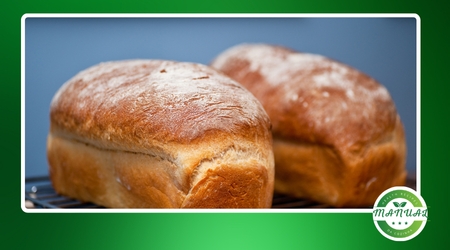
Who said to do homemade no-knead bread Does it require master baker skills? In 2025, the search for practicality and authenticity in the kitchen has never been more relevant.
Adverts
With just four basic ingredients: flour, water, yeast, and salt, you can transform the simple into the extraordinary: artisanal bread, crispy on the outside, soft on the inside, and best of all, without the need to knead.
Here, there's no room for myths or complications. Simplicity reigns, and the results surprise even the most skeptical.
According to a study by ABIMAPI (2024), 68% of Brazilians prefer homemade bread, valuing natural ingredients and transparent processes.
And what makes this technique so special? It challenges the idea that quality bread requires physical effort. Instead of kneading for long minutes, you let nature work for you.
Adverts
Slow fermentation, combined with adequate rest, creates a perfect gluten structure without manual intervention. It's proof that sometimes less is more—and better.
Why Has No-Knead Bread Conquered Modern Kitchens?
We live in an age of efficiency. Time is a scarce commodity, but the desire for healthy food remains.
O homemade no-knead bread eliminates the need to knead for long minutes, making the process accessible even for beginners.
Imagine a loaf of bread that rises on its own, effortlessly, like a project that develops autonomously. This analogy reflects the magic of slow fermentation, where gluten naturally forms.
Plus, the technique allows for greater flexibility. You can prepare the dough before bed and bake it in the morning, or let it ferment in the refrigerator for up to 48 hours for a more complex flavor.
Another deciding factor is the unique texture.
Kneaded breads tend to be more uniform, while the no-knead method produces the irregular, bubbly crumb characteristic of high-quality artisan bread.
And it's not just about convenience. Homemade breads avoid the preservatives and additives common in processed versions, ensuring a purer, more nutritious meal.
+ Recipe for traditional Minas Gerais angu
The 4 Ingredients You Already Have at Home
Flour, water, salt, and yeast are the main ingredients. Nothing else. Regular wheat flour works perfectly, but whole-wheat or grain-based versions add nutrients and texture.
Warm water (about 30°C) activates the yeast, while salt controls fermentation and enhances flavor. A precise balance, like an orchestra where each instrument has its moment.
Dry or fresh yeast is the heart of the process. If you prefer a more rustic touch, natural yeast (levain) also works, although it requires adjustments to the fermentation time.
What if you're missing an ingredient? Smart substitutions work.
Rye or oat flour can complement wheat, and honey or brown sugar can help feed the yeast in slow fermentation.
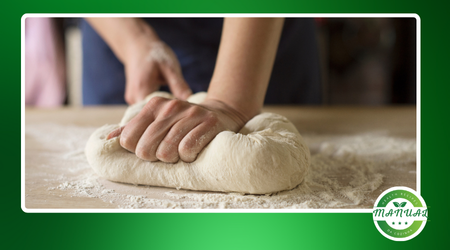
The Secret Is in Time, Not in Force
The technique of homemade no-knead bread It depends on patience. The dough rests for hours, developing structure and flavor without manual intervention.
One example? Let it ferment overnight at room temperature. When you wake up, you'll have an airy dough, ready to bake.
Another option is to use the refrigerator for prolonged fermentation, ideal for those looking for a moister crumb.
Ambient temperature directly influences the result. On cold days, fermentation will be slower; on warm days, it will speed up. Adjust the times as needed.
What if the dough doesn't rise? Check the expiration date of the yeast and the temperature of the water.
Sometimes a little more patience will do the trick, fermentation is not an exact science.
+ How to make homemade vegetable broth
Common Mistakes (and How to Avoid Them)
Too much flour when shaping the bread results in a dense dough. Lightly moisten your hands to handle the dough without sticking.
Expired yeast is another culprit. Test its vitality by dissolving a pinch in warm water. If it doesn't form bubbles within 10 minutes, discard it.
Another common mistake is baking in a cold oven. Preheat the oven well (at least 220°C) to ensure good rise and a crispy crust.
And the bread turned out too sour? Reduce the fermentation time next time or use less yeast.
From Oven to Table: Tips for Perfect Baking
Baking in a cast-iron pan ensures a golden, crispy crust. Preheat the pan in the oven before adding the dough.
Want a professional touch? Moisten the surface of the bread before baking. The steam created during baking improves crust development.
Another effective technique is to bake with a pan of water in the oven. The extra steam helps with rising and the final texture.
And how do you know if the bread is baked? Tap the bottom lightly—if it sounds hollow, it's ready.
+ Recipe for crispy on the outside and soft on the inside rain cake
Homemade No-Knead Bread vs. Industrial Bread: Is It Worth the Switch?
While store-bought breads contain preservatives and additives, homemade breads give you complete control over the ingredients.
A real example: Maria, a teacher from São Paulo, replaced sliced bread with homemade no-knead bread and noticed better digestion and more satiety.
Furthermore, the cost-benefit is attractive. One package of flour makes several loaves of bread, with a lower final cost than premium industrial products.
And the taste? There's no comparison. Homemade bread has personality, aroma, and freshness that store-bought products can't replicate.
Creative Adaptations to Vary the Flavor
Add fresh herbs, olives, or even a drizzle of honey to the dough. Each variation transforms the bread into a unique experience.
For those looking for protein, flax or chia seeds increase nutritional value without altering the basic technique.
Grated cheese, sun-dried tomatoes, and even bacon bits can be incorporated into the dough before fermentation.
And for a sweet touch, try raisins, cinnamon, and walnuts.
Are You Ready to Try It?
If simplicity has overcome complexity in so many areas of life, why not in the kitchen? homemade no-knead bread proves that less can be more.
Learn more techniques for making bread without kneading:
Now, just get your hands dirty (no need to knead!).
Frequently Asked Questions
1. Can I use natural yeast instead of biological yeast?
Yes, but the fermentation time will be longer. Adjust the recipe and watch the dough rise.
2. Why did my bread turn out too dense?
It could be too much flour, weak yeast or too little fermentation time.
3. Can I freeze the dough?
Yes, after the first fermentation. Thaw in the refrigerator before baking.
4. What is the best flour for this method?
All-purpose or whole-wheat flour works well. Avoid low-gluten flours.
5. Can I make this recipe gluten-free?
Yes, but the texture will be different. Use gluten-free flour blends and gums for better structure.