
Light and airy intense chocolate mousse without cream.
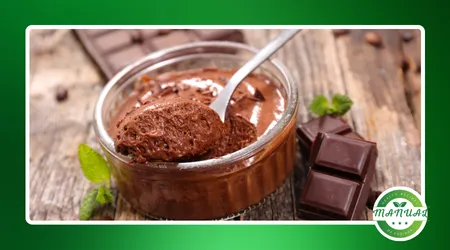
The search for aerated chocolate mousse Perfection often falls short due to the excessive use of heavy fats or creams that merely mask the true character of the cocoa.
Adverts
It's curious how commercial pastry-making has become addicted to the ease of using heavy cream, sacrificing sensory potency in exchange for an artificial stability that, ultimately, leaves the palate feeling saturated.
In this guide, I prefer to look at food science from a more purist perspective. We will understand how the structure of proteins and the rigor of temperature allow us to achieve an almost ethereal, cloud-like texture.
Whether you want to elevate your professional menu or simply master a classic technique, this course details what truly matters for success in the kitchen.
Table of Contents
- The Science of Texture: Understanding Natural Aeration
- How can I replace heavy cream without losing stability?
- What is the impact of cocoa content on the final result?
- Why is the emulsion technique the secret to shine?
- Table of Proportions: Balance of Ingredients
- FAQ and Conservation Considerations
Why does airy chocolate mousse require technique and not just ingredients?
There is a persistent misconception among pastry chefs that the lightness of a dessert depends on the amount of whipped fat.
Adverts
In practice, the real aerated chocolate mousse It's a physical phenomenon: a network of air bubbles trapped in a matrix of chocolate and proteins.
When we remove dairy from the equation, the game changes. We resort to the dominance of egg whites or aquafaba in an almost architectural way.
The surface tension of the bubbles needs to be meticulous; if they are irregular, the dessert loses its shape and collapses in the display case within a few hours.
Beyond the physical aspects, there's a question of honesty in the flavor. Without the barrier of milk fat, the acidic notes and deep aromas of cocoa are expressed unfiltered.
It's a more adventurous gastronomic experience and, therefore, much more memorable and sophisticated for the customer.
So that aerated chocolate mousse To achieve the discussed standard of excellence, precision in the method is more valuable than the list of inputs itself.
Below, I detail the technical formulation for a professional result, prioritizing the structural stability and purity of the cocoa.
Ingredients (Professional Ratio)
- 200g of dark chocolate (60% to 70% cocoa): Avoid compound chocolate coatings; the flavor depends on the purity of the cocoa butter.
- 4 large eggs (preferably pasteurized): Egg yolks and whites separated meticulously.
- 50g of refined or fine demerara sugar: Essential for the physical support of the aerator.
- 1 pinch of salt: It acts as a flavor enhancer, reducing the perception of excessive bitterness.
- Optional: Shavings of tonka bean or instant coffee (half a teaspoon) to enhance the sensory profile.
Technical Preparation Method
1. The Chocolate Base (The Emulsion)
Chop the chocolate into uniform pieces and melt it in a double boiler with the heat already turned off — the residual heat of the water is sufficient and prevents the cocoa solids from burning. When it is fluid and shiny, add the egg yolks one at a time.
Stir vigorously with a wire whisk (whisk) after each addition. The mixture should be lukewarm, around 45°C. If the chocolate is too hot, the egg yolks will cook; if it is cold, the mixture will "lock up" and lose its malleability.
2. Structured Meringue
In a spotlessly clean bowl, beat the egg whites with a pinch of salt. As soon as they begin to foam, gradually add the sugar.
The secret here is the point of flexible spikesWhen lifting the whisk, the tip of the egg white should bend slightly. If you beat it until it becomes too stiff (meringue stage), you will have difficulty homogenizing the batter, resulting in white lumps that compromise the aesthetics of the mixture. aerated chocolate mousse.
3. Incorporation (The Critical Moment)
Add one-third of the egg whites to the chocolate mixture and mix with a wire whisk. This step serves to "sacrifice" some air in exchange for lightness in the base, making the next phase easier.
Pour in the remaining egg whites and replace the whisk with a silicone spatula. Use folding motions, from the bottom up, rotating the bowl with your other hand.
Stop the moment the color is uniform; every extra movement after homogenization removes the air you struggled to incorporate.
4. Stabilization and Crystallization
Distribute the mousse into serving glasses or containers. It is recommended to cover with plastic wrap, pressing it against the surface, to prevent the cold from forming a dry crust on top.
The resting period in refrigeration should be at least 6 hoursThis time allows the cocoa butter to recrystallize, creating a solid armor that holds the microbubbles of air, ensuring that the dessert does not "melt" when served.
What is the role of eggs in stabilizing mousse without added fat?
To achieve that gravity-defying density, using pasteurized eggs is the smartest approach in the current scenario.
The egg yolks aren't there by chance; they act as a chemical link, perfectly binding the fat in the chocolate to the liquids in the recipe.
Egg whites are responsible for expansion. This is where many go wrong: overbeating egg whites creates a "dry snow" that refuses to incorporate, resulting in visible lumps. The ideal consistency is that of flexible peaks, which maintain their structure without losing the necessary elasticity.
The French technique for Swiss meringue, heating egg whites and sugar to 65°C, is not merely a microbiological safety whim.
This process alters the structure of the proteins, ensuring that your mousse can withstand temperature variations without releasing water or losing its original volume.
How does high-performance chocolate influence the structure of the dessert?
The choice of raw material is often misinterpreted as being solely a matter of price. For a aerated chocolate mousse Without heavy cream, the cocoa butter content is what keeps the dessert upright after cooling.
The ideal balance fluctuates between 60% and 70% of cocoa. Below that, there's a lack of "skeleton" to hold the air; above that, the tannin load can leave the texture brittle, almost sandy. You need to feel the melting point so as not to ruin the work.
Melt the chocolate patiently. Using a microwave on medium power or a double boiler with the heat off prevents the sugar crystals from becoming bitter or burnt.
Maintaining the mixture at around 45°C is vital for the emulsification to occur in a fluid and natural way.
Table of Average Portions and Nutritional Values (Based on 100g)
This technical data helps in calculating precision for those who approach confectionery as a serious business and desire transparency in artisanal labeling.
| Component | Traditional Mousse (with Cream) | Intense Aerated Mousse (without Cream) | Impact on Results |
| Fat content | 32g | 18g | Cleaner cocoa flavor |
| Thermal Stability | Low (melts quickly) | Medium/High | Best for transport |
| Cost of Inputs | Medium/High | Average | Higher profit margin |
| Color Intensity | Light Brown | Deep Brown | Sophisticated visual appeal |
| Perceived Sweetness | High | Balanced | Focus on the adult palate. |
Where can I find the best utensils for professional pastry making?
High-quality results require tools that won't fail under pressure, from precision thermometers to wire whisks with the right flexibility.
+ Banana bread cobbler, a hot dessert with streusel.
What are the critical steps to prevent chocolate foam from collapsing?
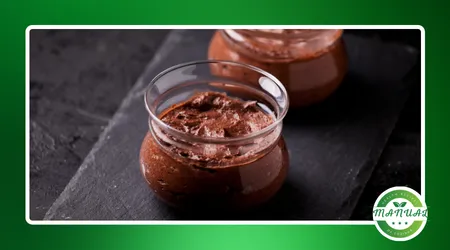
The fatal mistake in preparing for aerated chocolate mousse It happens at the final fold. Abrupt movements or the lazy use of electric beaters annihilate the air bubbles, transforming what should be a cloud into a dense, lifeless cream.
Use a silicone spatula and make smooth, upward motions, as if you were cradling the dough.
This technique preserves the volume achieved and ensures that the mixture remains homogeneous without sacrificing the lightness that the customer expects.
Resting is a silent ingredient. At least six hours in the refrigerator are necessary for the cocoa butter to crystallize and hold the air bubbles together. Cutting this time guarantees that the dessert will lose its structure as soon as it reaches the table.
How can you present the mousse to add commercial value to the product?
The minimalist aesthetic, so fashionable in 2026, suggests that less is more when quality is unquestionable.
To serve aerated chocolate mousse Served in faceted glass cups or as a filling for crispy tartlets, it conveys instant sophistication without needing any artifice.
A pinch of fleur de sel or shavings of tonka bean — our Amazonian vanilla — creates an aromatic contrast that takes the sweetness out of the ordinary.
Selling this product as "Dairy-Free" or "Pure Cocoa"It attracts a discerning and discerning audience seeking authentic experiences."
Transparency regarding the origin of the cocoa is a competitive advantage that should not be ignored. When the customer understands that the lightness comes from manual techniques and not from chemical stabilizers, the perceived value of your work instantly increases.
+ Tanghulu strawberry crunchy: viral internet sweet
FAQ: Frequently Asked Questions about Professional Chocolate Mousse
Can I use milk chocolate in this recipe?
It's possible, but the structure will be compromised by the lack of cocoa solids. Expect a much softer texture or consider using an extra structuring agent.
What is the shelf life of airy mousse made with eggs?
Kept under strict refrigeration (below 5°C), it is best consumed within 3 to 5 days. Freshness is what guarantees safety and flavor.
Is it possible to freeze ready-made mousse?
I don't recommend it. The ice breaks the delicate membranes of the air bubbles. When it thaws, you'll have a tasty cream, but the "airy" sensation will have completely disappeared.
Can I replace sugar with sweeteners?
Yes, provided they are suitable for oven and stovetop use. However, sugar helps with the physical stability of the meringue; substitutes may result in a slightly less firm mousse.
What to do if the chocolate mixture clumps?
This happens due to thermal shock. If the chocolate cools down too much before the egg whites are added, it hardens. Heat it in a double boiler for a few seconds and mix quickly to restore fluidity.
The balance between simplicity and technical rigor.
Master the aerated chocolate mousse The use of cream-free pastry is a game-changer. This technique reduces operational costs and elevates the product to a level of purity difficult to replicate with industrial methods. It's a return to the basics of classic pastry-making.
By focusing on the behavior of the cocoa and the patience of aeration, you deliver more than just a dessert; you offer a moment of honest, technically sound sensory pleasure.
Don't be afraid to experiment with different chocolate origins to find your brand's signature.
To better understand the safety standards and artisanal production guidelines that protect your business, it is worth consulting the collection of... ANVISA.
Being compliant is the first step in ensuring your creativity conquers the market with the authority it demands.