
Caramelized banana cake that comes out perfectly
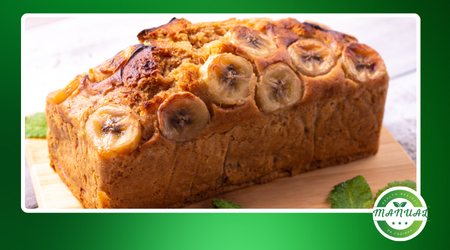
Ah, the caramelized banana cake! That unmistakable aroma that fills the house, the promise of comforting sweetness and the soft texture that melts in your mouth.
Adverts
However, for many culinary enthusiasts, this delicacy comes with a persistent challenge: the moment of unmolding.
How many times has your heart sank as you watched your masterpiece crumble, taking with it the expectation of perfect delight? No more frustrations.
Today, we'll uncover the secrets behind flawless release, ensuring your culinary creation is as visually appealing as it is delicious.
The Alchemy of Caramel: Understanding the Process
The base of a caramelized banana cake is, of course, its caramel. Far from being a mere garnish, it plays a crucial role in the final experience.
Adverts
A successful caramel layer, with the ideal consistency, is what allows the fruit and dough to come together harmoniously, but without sticking to the pan.
Mastering this step is the first step to perfection, requiring attention and a touch of patience. The caramel's consistency is crucial—not too liquid, not too hard.
The choice of banana is also crucial. Ripe bananas, almost with dark spots, are best for flavor and texture.
They release natural sugars that blend with the caramel, intensifying the cake's sweetness and moisture.
Choosing green or under-ripe fruit compromises the final result, resulting in a less flavorful cake and, ironically, more prone to problems when unmolding.
When cooking, the fruit also releases moisture, which helps prevent it from sticking.
+ How to make strawberry pie with light cream and firm gelatin
The pan, often overlooked, is a key element in this equation. Nonstick pans are the obvious allies, but even they require careful preparation.
Greasing and sprinkling, or using parchment paper on the bottom, are steps that cannot be underestimated.
The choice of pan material influences heat distribution, which directly affects the cooking process and the cake's ability to release.
Heat and Time: Pillars of Structure
The oven, with its temperature nuances, acts like a silent conductor in your kitchen orchestra.
The correct temperature and precise baking time are vital for the cake to cook completely, develop its internal structure, and release from the pan.
An oven that's too hot can burn the caramel and leave the center raw, while an oven that's too cold can prevent the structure from developing, resulting in a cake that collapses.
Indoor humidity is crucial, and gradual heat preserves it.
+ Creamy leek pie with buttery pastry
Patience is a virtue, especially after removing the cake from the oven. The temptation to unmold it immediately is strong, but resisting is the key to success.
The cake needs time to set, so that the internal structure stabilizes and the caramel softens slightly, making it easier to release.
This resting period is crucial to the integrity of your masterpiece. Like an athlete after a grueling race, the cake needs rest to recover.
The analogy of a building under construction is pertinent here. Imagine building a skyscraper and trying to remove the formwork before the concrete has fully cured.
The result would be disastrous. Likewise, the cake needs this time to "cure," so that its molecules can rearrange themselves and acquire the necessary firmness for handling.
Haste is the enemy of perfection in confectionery.
Advanced Techniques for Drama-Free Unmolding
To elevate your game, some additional techniques can be employed. One of them is the use of a bain-marie when baking.
Although more common for puddings and cheesecakes, this technique can be adapted.
Placing the cake pan inside a larger pan with hot water helps regulate the temperature and humidity;
Promoting more uniform cooking and preventing the caramel from hardening excessively at the base, making unmolding more fluid.
The extra humidity in the oven prevents the edges of the cake from drying out and sticking to the pan.
+ Marble cake recipe that mixes vanilla and chocolate in just the right amount
Another strategy is controlled thermal shock.
After the initial resting time, place the pan for a few minutes on a warm, damp cloth or in a container with a little hot water, without letting the water reach the cake.
The residual heat softens the caramel and releases the cake from the edges. It's a simple but effective trick that many experienced bakers use to ensure a smooth release.
The idea is to create an environment that facilitates detachment without damaging the structure of the cake.
The importance of scratch card of butter or oil in the form cannot be overestimated.
Some recipes suggest a light greased and floured one, but for the caramelized banana cake, a generous, even layer of melted butter or vegetable oil is most effective.
This fat barrier acts as a lubricant, preventing the caramel and dough from sticking to the metal. Make sure to cover all the nooks and crannies of the pan.
The Little Details That Make the Difference
Don't neglect the quality of your ingredients.
Fresh, ripe bananas, good sugar for the caramel, and quality flour directly impact the final result.
Fresh, well-sourced ingredients ensure not only flavor, but also the necessary structure for a cake that remains intact.
The flavor of a fresh ingredient is unparalleled and is reflected in the final product.
The room temperature of the ingredients is an often overlooked detail.
Eggs and milk at room temperature incorporate better into the dough, resulting in a more homogeneous and light texture.
This affects the cake's rise and its ability to release from the pan, as a uniform batter tends to cook more consistently.
The emulsion is much better with ingredients at this temperature.
Accuracy in measurements is another key to success.
Pastry, unlike some areas of cooking, is an exact science.
Small variations in the amounts of flour, sugar or liquids can alter the consistency of the batter and, consequently, the cake's ability to unmold perfectly.
Use kitchen scales for greater accuracy and follow the recipe exactly. The chemistry of the dough is very delicate.
Overcoming Common Challenges: Troubleshooting Tips
What if, despite all your care, the cake still refuses to come out of the pan? Don't panic.
One trick is to gently heat the bottom of the pan over a low flame on the stove for a few seconds.
The heat will soften any caramel that may be stuck, making it easier to remove from the pan. Do this carefully to avoid burning the cake. The idea is to use quick, superficial heat to loosen it.
Another approach is to use a thin spatula or a rounded-edge knife to carefully loosen the edges of the cake from the pan.
Gently slide the spatula between the cake and the pan, making sure it's around the entire perimeter. Do this before flipping to ensure there are no sticking spots.
Patience and delicacy are crucial at this stage to avoid damage.
If the problem is that the caramel has cooled and hardened too much, dampen a clean dish towel with hot water and wrap the pan in it for a few minutes.
The heat and moisture will help soften the caramel, making it pliable enough to release without tearing the cake. Remember, the goal is controlled heat, not complete immersion.
Data and Statistics: The Weight of Perfection
A recent study, published in 2023 by Food & Beverage Magazine, revealed that 651% of amateur bakers cite “problems unmolding” as the main challenge in recipes involving caramel.
This highlights the universality of this difficulty and the importance of mastering the correct techniques. Frustration is a feeling shared by many, and knowledge is the tool to overcome it.
| Common Problem | Recommended Solution |
| Cake sticks to the bottom | Grease generously and use parchment paper; allow to rest after baking. |
| Caramel breaks or sticks | Cook the caramel to the right point; controlled thermal shock. |
| Cake edges stuck | Use a thin spatula; gently heat the base of the pan. |
| Center of the cake crumbles | Complete cooking; respect cooling time. |
The Psychology of Perfect: Why Do We Care So Much?
Why do we dedicate so much effort to a detail like perfect unmolding? The answer transcends cooking and touches on our very human nature.
One caramelized banana cake that comes out flawlessly is not just a technical feat; it is a visual representation of success, of attention to detail, of mastery over a process.
It's the embodiment of our desire to create something beautiful and functional. It's the satisfaction of seeing our expectations met.
It's like an artist finishing a sculpture. Every stroke, every detail, matters.
The moment of removing the veil from the work is as crucial as the creative process itself. A perfect unmolding is the baker's "veil moment," the revelation of their hard work.
And the reward is not just the taste, but also the admiration, the sense of accomplishment.
The sensory impact of a well-presented dish is undeniable.
Our eyes eat first. An impeccably presented cake invites you to savor it, elevates the culinary experience, and conveys a sense of care and attention to detail.
The aesthetics of a dish are as important as its flavor, and the perfect unmolding is the final touch that crowns your work.
The Legacy of Caramelized Banana Cake: A Personal and Shared Journey
The search for caramelized banana cake Perfect is a continuous journey, full of learning and, occasionally, small disasters.
Each attempt, each adjustment to the recipe or technique, brings us closer to the ideal. It's an experience that teaches us patience, precision, and, above all, resilience.
After all, cooking is an art that improves through practice and experimentation.
To further improve your culinary skills and explore new recipes, I suggest visiting the renowned portal: tudogostoso.com.br
Sharing a flawless caramelized banana cake with friends and family is more than just offering dessert; it's sharing a piece of yourself, your hard work, and your passion.
It's an invitation to the table, to conversation, to affection. Food, at its core, is a universal language of love and care. And when the experience is perfect from start to finish, the memory becomes even sweeter.
So the next time you venture into preparing your caramelized banana cake, remember these tips.
Focus on the caramel, the banana selection, the pan preparation, the oven temperature, and, crucially, patience. Allow your cake to rest and reveal its perfection in due time.
The result will be a feast for the eyes and a delight for the palate, a cake that not only satisfies hunger but also nourishes the soul. How about embarking on this journey toward perfection in your kitchen?
To further improve your culinary skills and explore new recipes, I suggest visiting the renowned portal