
Traditional Pernambuco-style rolled cake recipe
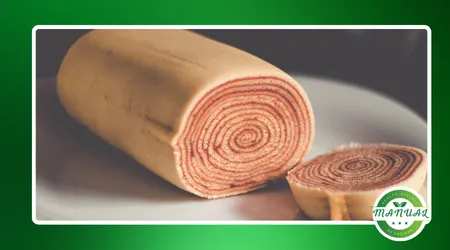
The story of traditional Pernambuco roll cake It takes us back to the colonial period. It's not just a cake, but a flavorful testament to Brazilian creativity.
Adverts
Its origin is linked to the "bride's mattress," a Portuguese sweet. Due to a shortage of almonds, the filling was adapted.
Thus, the Northeastern Brazilian touch of guava paste took center stage. The delicacy became established with the sugar cycle.
This ingenious adaptation resulted in very thin layers. They are filled with creamy guava paste.
This technique of layering multiple pieces defines its identity. The contrast in textures is unmistakable.
Adverts
It's important to point out that it shouldn't be confused with a Swiss roll. The dough for a Swiss roll is rich in butter. A Swiss roll, on the other hand, has a lighter dough.
Formal recognition came in 2008. The State of Pernambuco declared it a Cultural and Intangible Heritage.
This certification protects the original recipe and its tradition. It ensures that the preparation remains true to its roots.
The bolo de rolo (rolled cake) has become a symbol of regional identity.
What makes the traditional Bolo de Rolo recipe stand out?
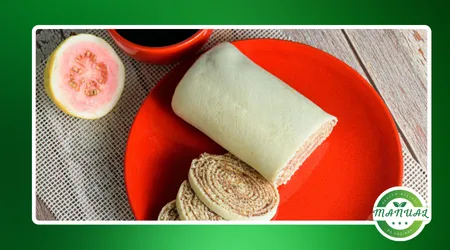
The traditional recipe requires dedication and precision in its execution. The dough should be spread in almost transparent layers.
It's crucial to bake quickly, for just a few minutes. This ensures the necessary flexibility for perfect rolling.
The guava filling should be turned into a smooth paste. Generally, guava paste and a little water or wine are used.
This syrup needs to be spread evenly over the hot dough. The heat helps it adhere and become more pliable.
The secret lies in the careful and firm wrapping.
++Easy and delicious pumpkin quibebe
Repeating the process creates a perfect cylinder. Each layer of dough is added to the already started roll.
Finally, the cake receives a layer of granulated or powdered sugar. It is this final touch that seals its authenticity.
| Base Ingredient | Function in Traditional Recipes | Difference compared to Swiss roll |
| Butter (25%) | Richness, flavor, and moisture of the dough. | Much higher content (Swiss roll has $, yes 10, %$ or zero). |
| Guava paste | Traditional and unmistakable filling. | It replaced Portuguese almonds. |
| Layers | Characteristic spiral shape. | Four or more very thin layers; a Swiss roll uses only one. |
The result is an elegant and delicate dessert. It has become a complete sensory experience. To savor it is to immerse oneself in history.
What ingredients guarantee the authenticity of this dessert?
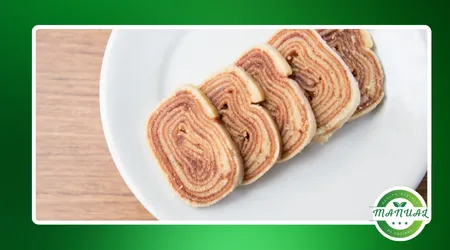
The traditional version is defined by its faithfulness to the basic ingredients. Wheat flour, eggs, butter, and sugar make up the dough.
++Yogurt cake with lemon zest and powdered sugar frosting
The filling is pure guava paste, melted until it becomes a smooth paste. Simplicity is the key to excellence here. There's no room for complex additives.
The high proportion of butter gives weight and density to the dough. This characteristic differentiates it from common sponge cakes.
Remember, rolled cake doesn't incorporate much air during its preparation. The process begins with beating the butter and sugar together.
The dough for bolo de rolo (rolled cake) incorporates very little air.
The preparation process begins with beating the butter and sugar, followed by adding the eggs, one at a time.
This method results in a denser, richer, and moister dough, crucial for the thin rolled layers.
Why Does Guava Paste Remain the Number One Choice?
Guava was abundant in the Pernambuco region during the colonial period. This natural availability led to the substitution of expensive almonds.
The success was immediate and lasting. The sweetness of the guava balances with the neutral texture of the dessert. This fruit represents Brazilianness in the dessert.
The distinctive flavor and texture of melted guava paste are undeniable. Although modern versions with chocolate or dulce de leche exist, the original remains timeless.
Explore more: National Roll Cake Day: Discover the origin of this traditional recipe and learn how to prepare it.
O traditional Pernambuco roll cake It's synonymous with guava paste. How can we ignore the power of tradition in a constantly changing world?
How does Bolo de Rolo cross borders today?
The bolo de rolo (rolled cake) has transcended the borders of Pernambuco. Today, it can be found in large delicatessens and bakeries throughout Brazil.
We see this growth, for example, in the expansion of businesses focused on this delicacy.
Entrepreneur Karoliny Araújo, with her business "É Bolo de Rolo," brought the original recipe to Mato Grosso do Sul. She won the 2023 Assaí Academy Award.
In the events market, the dessert has become a trend at weddings and luxury parties in major cities like Fortaleza and São Paulo.
This popularity demonstrates the strength of the local culture. National and international interest is only growing. The authentic flavor is a magnet.
A recent survey by the gastronomic guide TasteAtlas In 2024/2025, it was chosen as one of the most popular desserts in Brazil.
Bolo de rolo consistently ranks among the top 6 Brazilian desserts by users of the platform. This confirms the public's appreciation for it.
+ Yogurt cake with lemon zest and powdered sugar frosting
Conclusion: Why is the Traditional Pernambuco Roll Cake Immortal?
The tradition of traditional Pernambuco roll cake It remains unshaken. Its history dates back to the 17th century, at the height of the sugar cycle.
The ingenuity in adapting a European dessert has bequeathed us this gem. This cultural and gastronomic heritage deserves to be celebrated.
The cake is not just food, but a story. It's a way to keep the memory of Pernambuco alive. Each slice tells a story.
The flavor evokes a connection with the past. Analogy: The bolo de rolo (rolled cake) is like an ancient scroll, whose thin layers of dough and guava paste reveal, with each turn, the history of cultural miscegenation and Brazilian confectionery.
The authentic version is a delight for the senses. Be sure to try the version with the extra-thin crust.
The real one traditional Pernambuco roll cake It's a must-see experience. It proves that simplicity, when executed masterfully, achieves perfection.
Frequently Asked Questions
Can bolo de rolo be considered a Swiss roll?
No. A bolo de rolo (rolled cake) is distinct from a rocambole (Swiss roll). The main difference lies in the dough and the technique used.
Bolo de rolo has a denser dough, with a high butter content, and is made of multiple, very thin, rolled-up layers.
Swiss rolls, in general, use a sponge cake-type batter, which is lighter and airier, made in only one or two thicker layers.
How long does bolo de rolo (rolled cake) last?
Rolled cake is traditionally eaten fresh, but it can be stored at room temperature for up to 5 days if properly packaged.
In the refrigerator, it can last up to 10 days. It is recommended to wrap it in plastic wrap to prevent it from drying out, due to its thin layers.
Is the traditional filling always guava paste?
Yes, the traditional filling that guaranteed its success. status The most recognized Intangible Cultural Heritage recipe is that of melted guava paste. Variations such as dulce de leche and chocolate exist and are popular, but the authenticity of the recipe lies in the guava.