
Sweet potato: healthy energy for your daily life

A sweet potato emerges as a beacon of energy and health, consolidating its position as one of the most valuable foods for everyday life.
Adverts
Its rise from a staple to a coveted item for health enthusiasts and athletes reflects a growing search for energy sources that nourish and sustain, without the spikes and crashes associated with refined carbohydrates.
Its culinary adaptability and robust nutritional profile make it an almost universally approved choice by nutritionists and food lovers.
Unlocking the Nutritional Treasure: Beyond Simple Energy

The versatility of sweet potato in the kitchen is one of its greatest charms.
Whether as a velvety puree, crispy baked chips, or a secret ingredient in sweet and savory dishes, it integrates harmoniously into any meal.
Adverts
Its naturally sweet flavor, combined with a texture that can be firm or soft, elevates it from a mere side dish to a main star.
++5 canned tuna recipes for dinner
However, the true magic of this food lies in its nutritional composition.
It is a powerhouse of complex carbohydrates, which means that energy is released gradually and steadily.
This not only provides a lasting feeling of fullness, but also prevents those dreaded energy crashes that can sabotage your productivity.
Unlike other simple carbohydrates, which promote a rapid rise in blood glucose, sweet potatoes act like a low-revving, efficient and long-lasting engine.
In addition to carbohydrates, this superfood is a true cocktail of essential vitamins.
It is particularly rich in vitamin A, present in the form of beta-carotene, a powerful antioxidant that contributes to healthy vision and skin.
Vitamin C, essential for the immune system, and several B vitamins, vital for energy metabolism, are also abundantly present.
++The benefits of pineapple for lunch and dinner
In terms of minerals, sweet potatoes offer potassium, which helps regulate blood pressure, and manganese and copper, which are important for various enzymatic functions in the body.
Fiber, another crucial component, plays a vital role in digestive health. It promotes bowel regularity and acts as a prebiotic, feeding beneficial bacteria in the gut.
++The benefits of eggs in your daily diet
The Constant Flow of Energy: Powering a Day Full of Accomplishments
Consider it the long-lasting battery for your day.
Instead of momentary bursts of energy followed by abrupt drops, it provides a continuous, steady flow.
This is particularly beneficial in a world where the demands on mental and physical energy are constant. Imagine yourself on an intense day of work or study.
The sustained energy that sweet potatoes provide helps maintain focus, mental clarity, and resilience.
++Vegetable and cheese pie: a light recipe that's perfect for dinner
For a student facing a study marathon or a professional immersed in a complex project, the ability to maintain concentration is invaluable.
By stabilizing blood sugar levels, it prevents the brain fog and fatigue that often accompany diets high in high-glycemic carbohydrates.
This allows you to stay alert and productive from start to finish of the day.
An Inclusive Food Choice: Benefits for All Lifestyles
The beauty of sweet potato lies in its ability to benefit a wide range of individuals, regardless of their health or lifestyle goals.
For athletes, it is an exemplary pre-workout food, providing the energy needed for intense sessions, and an excellent resource for post-exercise muscle recovery, replenishing glycogen reserves.
For those seeking weight control, its high concentration of fiber and complex carbohydrates promotes satiety, helping to control appetite and prevent excess calorie consumption.
Vegetarians and vegans find it a nutritious and complete alternative to carbohydrates of animal origin.
Its versatility allows it to be incorporated into a multitude of dishes, making the transition to a plant-based diet easier and more flavorful.
Even for children, sweet potatoes are a great option, providing essential nutrients for growth and development in a natural and appetizing way.
A relevant fact that supports the importance of sweet potato is that the Food and Agriculture Organization of the United Nations (FAO) recognized it as a fundamental food for global food security.
To learn more, explore: Find out how your body responds if you eat sweet potatoes every day.
And he highlighted its high nutritional value and its ability to adapt to diverse climatic conditions, which makes it a resilient and accessible crop in many regions of the world.
This underscores its importance not only for individual health but also for nutrition on a large scale.
| Nutrient | Quantity (per 100g of cooked sweet potato) | % of the Recommended Daily Value* |
| Calories | 76 kcal | 4% |
| Carbohydrates | 17.7 g | 6% |
| Fibers | 2.5 g | 10% |
| Vitamin A | 709 µg | 79% |
| Vitamin C | 19.6 mg | 22% |
| Potassium | 337 mg | 7% |
| Manganese | 0.26 mg | 11% |
| Copper | 0.10 mg | 11% |
*Source: USDA FoodData Central and Reference Daily Values for adults.
Everyday Cooking: Simplicity and Flavor
Integrate the sweet potato in your eating routine is an invitation to creativity and experimentation.
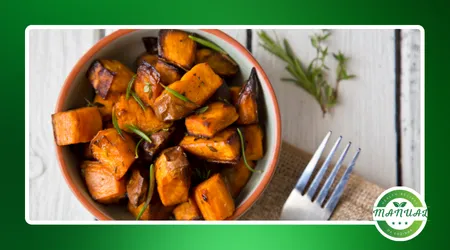
In addition to the more traditional options, such as baked sweet potatoes with olive oil and rosemary, there is a world of possibilities.
Imagine starting your day with sweet potato and oat pancakes, an energizing and nutritious breakfast option.
Or, for lunch, a vibrant salad bowl with cubes of roasted sweet potato, greens, grains, and a citrus dressing.
For dinner, a hearty stew with lentils and sweet potato chunks can be the main course, warming and nourishing the body after a long day.
For a quick and easy snack, make homemade energy bars with mashed sweet potatoes, dates, and nuts—perfect for carrying in your bag.
The sweet potato's versatility allows it to be both the base for comforting dishes and a special touch in gourmet recipes, proving that eating healthy doesn't have to be boring.
A Food That Remains
A sweet potato is not a mere food fad, doomed to disappear as quickly as it appeared.
It represents a return to simplicity and ancient nutritional wisdom, combined with the support of modern science.
Its status as an accessible and cultivable food in various parts of the world solidifies its importance in human nutrition.
In a scenario where the search for functional and sustainable foods is intensifying, sweet potatoes stand out for their ability to deliver multiple benefits without complexity.
Its ease of preparation and storage, combined with its complete nutritional profile, makes it a practical choice for today's pace of life.
She is the embodiment of smart eating: nutritious, tasty and versatile.
In times of information overload and contradictory diets, sweet potatoes remain a reminder that nature provides everything we need for a full and energized life.
Are we really taking advantage of all the potential that nature offers us?
Frequently Asked Questions
1. Is sweet potato suitable for people with diabetes?
Yes, it can be included in the diabetic diet, but in moderation. Its glycemic index is lower than that of regular potatoes, resulting in a more gradual rise in blood glucose. It's always recommended to consult a nutritionist for a personalized meal plan.
2. Is it safe to consume sweet potatoes daily?
Absolutely! Sweet potatoes are a nutritious food and can be eaten daily as part of a balanced diet. Varying the preparation methods helps maintain interest and ensure a greater variety of nutrients.
3. What cooking method best preserves the nutrients in sweet potatoes?
Steaming or baking are the best methods for retaining nutrients. Frying, on the other hand, adds fat and can cause the loss of some heat-sensitive vitamins.
4. Does eating sweet potatoes lead to weight gain?
No, sweet potatoes, by themselves, are not fattening. Like any food, weight gain or loss depends on the overall calorie balance of the diet.
5. Are there any significant nutritional differences between purple and orange sweet potatoes?
Yes, while both are nutritious, the orange sweet potato is notably rich in beta-carotene, the precursor to vitamin A, responsible for its vibrant color. The purple variety, in turn, is rich in anthocyanins, powerful antioxidants that give it its purple hue.