
Storage Tips to Keep Food Fresh Longer
Storage Tips: Did you know that how we store food affects its freshness?
Adverts
Many of us have seen fruits and vegetables rot quickly, and dried foods lose their crispness.
But why does this happen and how can you avoid it?
In this article, we will show you how to preserve food so that it stays fresher and tastier.
Let's talk about choosing the best foods and storing them correctly.
Adverts
This way, you can extend the shelf life of your food and reduce waste.
Let's talk about the importance of maintaining the right temperature for storage.
And how to use airtight containers to prevent moisture.
We'll also look at how freezing can help keep food fresher for longer.
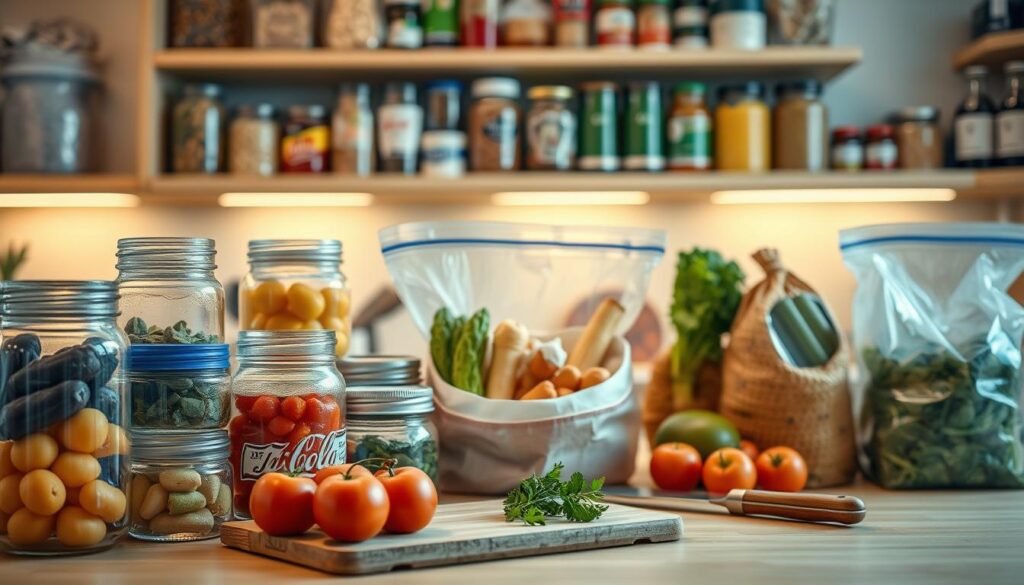
Main Points
- The ideal temperature range for storing food in the refrigerator is between 1°C and 4°C.
- Airtight containers prolong the freshness of dry foods by keeping out moisture.
- Freezing fresh foods can preserve their freshness for significantly longer periods.
- Fruits and vegetables that release ethylene, such as bananas and tomatoes, should be stored separately.
- Avoiding storing perishable foods in the refrigerator doors can help maintain freshness.
- Washing fruits and vegetables with a vinegar and water solution can help remove up to 98% of pesticide residue and bacteria.
- Keeping your refrigerator clean and organized can reduce food waste.
Ready to learn how simple storage changes can improve the freshness and flavor of your food? Let’s explore together!
Importance of Storing Food Properly
Storing food correctly is very important.
This helps prevent stomach problems caused by bad foods.
In our daily routine, we often forget to take care of storage.
But taking good care of our food is essential for our health.
One third of the food produced in the world is thrown away, often due to incorrect storage.
This harms the environment and our pockets.
Therefore, it is important to know how to store food properly to avoid waste and maintain the quality of food.
Additionally, the shelf life of food can change with temperature and humidity.
For example, ready-made meals should be eaten within three days.
Fruits such as apples, lemons and oranges can be stored in the refrigerator or at room temperature.
Knowing how each food should be stored is crucial.
The right temperature is essential. Meat, poultry and other foods should be kept at 4ºC.
Milk and dairy products need to be kept at 7ºC. It is important not to overload the refrigerator to maintain the right temperature.
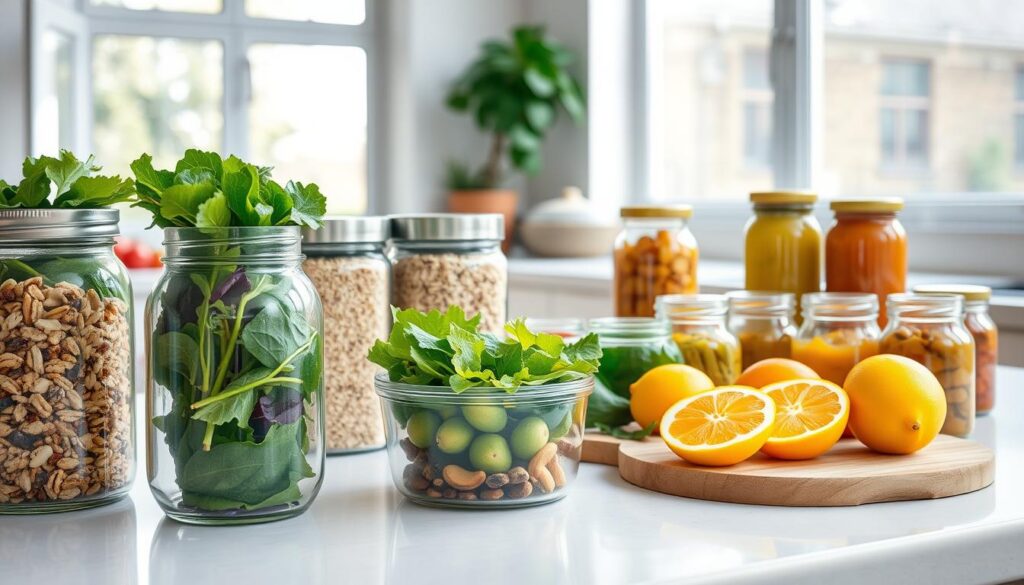
Organizing your refrigerator helps a lot. Place ready-to-eat foods on the top shelves.
Pre-prepared in the middle and raw in the lower ones. Cleaning with detergent and disinfectant is also essential to maintain hygiene.
Finally, use a thermometer to monitor the temperature. Perform regular maintenance.
With these tips, we take advantage of the benefits of correct storage. This helps reduce waste and take care of our food health.
| Food Type | Ideal Temperature | Expiration Date |
|---|---|---|
| Beef and pork | 4ºC | 3 days |
| Milk and dairy products | 7ºC | 5 days |
| Fruits (apple, lemon, orange) | 2ºC to 10ºC | 7 days |
| Ready meals | 4ºC | 3 days |
How to Reduce Food Spoilage
To reduce food spoilage, it is essential to know the storage techniques.
Let's look at how to extend the freshness of fruits, vegetables, meats, and grains. We'll also talk about how to prevent spoilage.
Maintaining the right temperature and humidity is critical.
The refrigerator should be kept between 1 and 4 degrees Celsius. This ensures that meats and other perishable foods are kept fresh.
Using closed containers helps control humidity and prevent bacteria and mold.
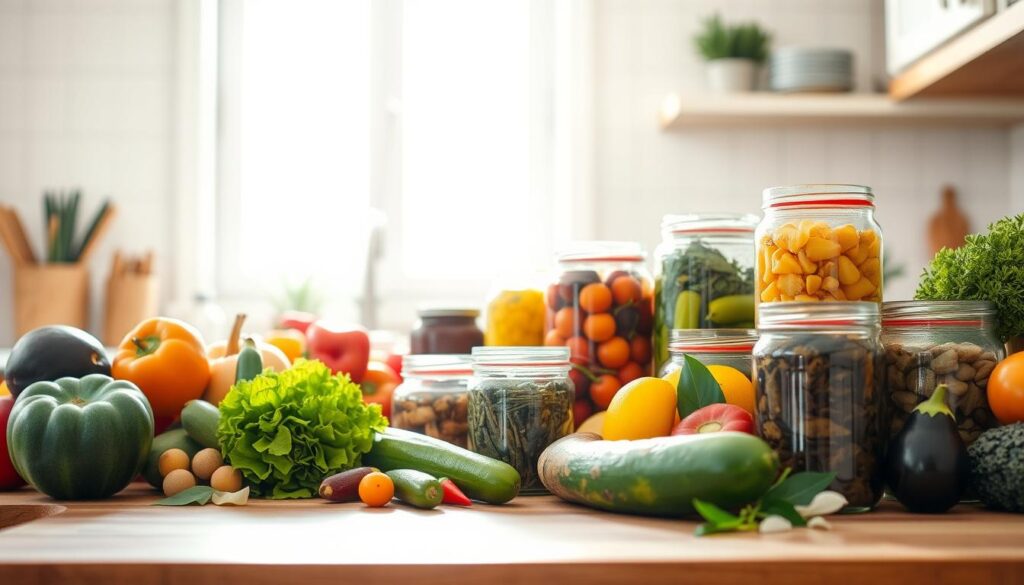
It is important to take care of ethylene gas. Foods that produce ethylene gas, such as bananas and tomatoes, should be separated.
This prevents sensitive products such as potatoes from spoiling prematurely.
See the table below to find out the shelf life of some well-stored foods:
| Food | Shelf Life (Correct Storage) |
|---|---|
| Apples | Several weeks |
| Pears | Two weeks |
| Peaches | One week |
| Asparagus | Up to a week (in a glass of water in the fridge) |
| Celery | A few weeks (in foil) |
| Ripe avocados | In the fridge |
Simple practices can make a big difference. For example, storing romaine and lettuce in the refrigerator can extend their freshness for up to a week.
Using ventilated containers for berries also helps prevent mold, keeping them fresher for longer.
++ How to Freeze Food Without Losing Flavor and Nutrients
Storage Tips
To keep food fresh for longer, it is crucial to organize and store it correctly.
Follow a food storage guide helps avoid waste and maintain quality.
Let's show some practical tips for storage in the refrigerator and in general.
Cooked food should be eaten within 5 days of preparation.
It is important to keep the refrigerator below 10ºC. For frozen foods, the ideal temperature is 0ºC or below, preserving quality and preventing bacteria.
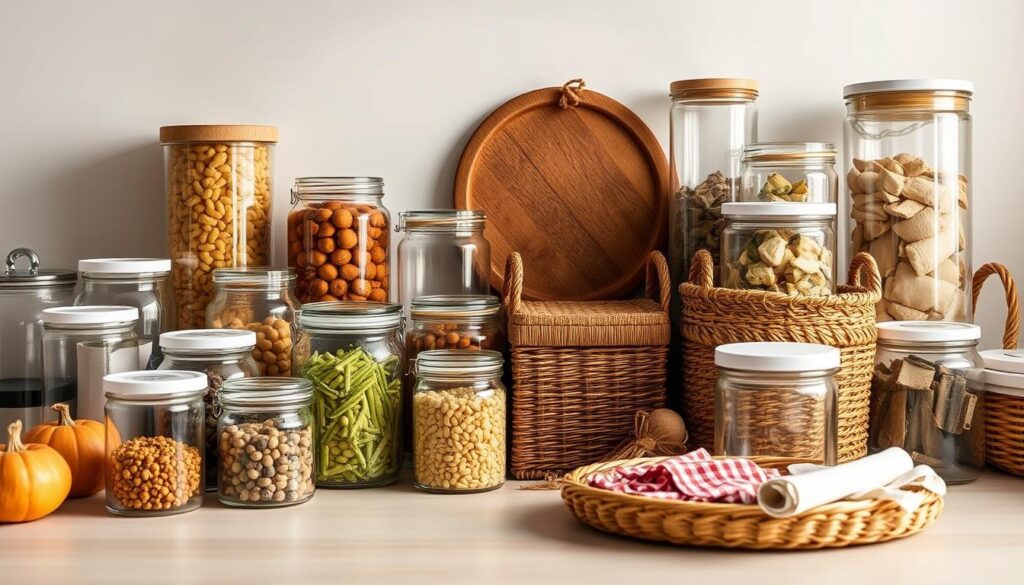
When thawing fish and poultry, consume within 12 hours. Vacuum storage extends the shelf life of food, as many bacteria need air.
Using glass containers is safer and more hygienic than some plastics.
For dry foods, avoiding excessive stacking prevents damage and contamination.
Organizing food by manufacturing and expiration date is essential.
Use the items that will expire faster first, following the rule FIFO.
Leafy foods and fruits should be washed and disinfected before storage.
| Category | Storage Tips |
|---|---|
| Cooked Foods | Consume within 5 days after preparation when refrigerated. |
| Thawed Food | Consume within a maximum of 12 hours after defrosting. |
| Storage Temperature | 0ºC or below for frozen foods and up to 10ºC for refrigerated foods. |
| Containers | Prefer glass to avoid toxins and make cleaning easier. |
| Dry Products | Avoid excessive stacking to avoid damaging packaging. |
Finally, cleaning products and hazardous substances should be stored separately from food.
With these practical tips, you will benefit from our advice on preservation in refrigerator and other storage methods.
++ Salty Rain Cake: An Easy and Delicious Recipe
Storage Tips: Using Appliances Correctly
To keep food fresh, it is important to adjust the temperature of the refrigerator and freezer.
The refrigerator temperature should be between 1°C and 4°C.
This helps to better preserve perishable foods.
For the freezer, it is recommended to keep the temperature at around -18°C.
This prevents freezer burn and maintains food quality.
It is essential to use the refrigerator compartments according to their function.
For example, the bottom drawer is ideal for fruits, vegetables and legumes.
The refrigerator door, with its greater temperature variation, is better for cans and condiments.
Keeping appliances in good condition is essential.
Cleaning the condenser coils and checking the door seals are important practices.
Defrosting your freezer from time to time also helps extend the life of your appliances.
When defrosting food, use plastic containers to avoid contamination.
These actions help keep food fresh for longer.
Modern home appliances with advanced technologies bring many benefits.
Humidity-controlled refrigerators and self-defrosting freezers are examples.
They help to preserve food better.
Choosing energy-efficient appliances is good for the environment and saves on your electricity bill.
Simple practices, such as turning off appliances when not in use, also help.
Running washing machines with full loads is another way to save energy and water.