Cornmeal cake with guava paste and anise, just like grandma's.
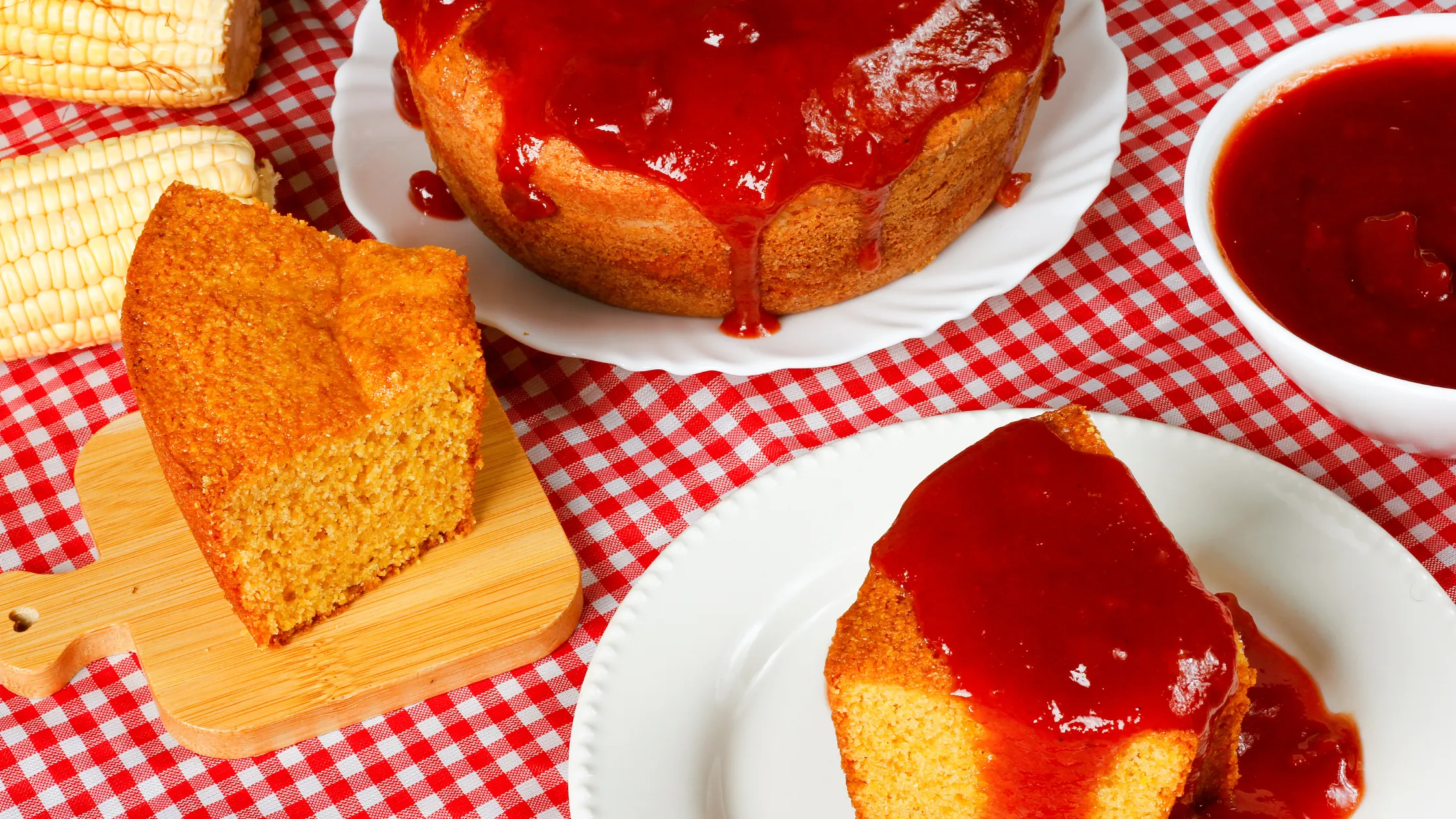
If you're looking for the true taste of childhood, prepare a Cornmeal cake with guava paste and anise. It's the perfect choice to warm the heart and bring the family together.
Adverts
This classic recipe combines incredible textures and nostalgic aromas, transforming any afternoon coffee into a unique moment of celebration and affection.
Comfort food is gaining more and more space in modern homes in 2026, as people value food made from scratch. Understanding the science behind combining corn with aromatic seeds elevates your homemade cake to the next level.
In this comprehensive guide, you'll learn professional techniques to ensure the perfect fluffiness for your dough, as well as tricks to prevent guava cubes from sinking. Discover the summary of our article below:
Summary
- The history and evolution of traditional corn cake.
- How to choose the best ingredients for a recipe.
- Detailed step-by-step instructions and baking tricks.
- Nutritional table and culinary equivalencies
- Frequently Asked Questions (FAQ)
Why is this combination a classic of comfort food?
Our culinary heritage bears deep traces of the rural culture, a time when corn reigned supreme in farm kitchens.
Adverts
Combining the rustic nature of this grain with the vibrant sweetness of guava paste ended up creating a cultural heritage that is inseparable from our homemade confectionery.
By adding some fennel seeds to the batter, we activate aromatic compounds such as anethole, which cut through the cake's excessive sweetness.
There's a subtle chemical synergy here that soothes the palate and, almost immediately, awakens old memories.
Looking back, cornmeal was the most accessible ingredient in the interior of Minas Gerais and São Paulo states, becoming the base for cornbread and other pastries.
Reviving this tradition in the year 2026 reflects our need to stand firm on something solid.
Behavioral research shows that traditional recipes provide much-needed psychological comfort in these fast-paced digital times.
Roasting a genuine Cornmeal cake with guava paste and anise. It acts as a breath of fresh air, a reconnection with what is simple.
Great chefs argue that simplicity demands even greater technical precision to ensure the result is anything more than mediocre. The secret lies in the perfect balance between the moisture of the dough and the distribution of the guava paste pieces.
How do you choose the right ingredients for the perfect cake?
The success of the recipe begins with the choice of cornmeal, which should preferably be of the water-mill or very fine artisanal type. Grains ground too coarsely tend to leave the dough dry and with that unpleasant sandy texture.
When buying guava paste, avoid the jarred or very soft versions; choose the traditional, thick, and firm type. It has less water and bravely withstands the oven's heat without completely disappearing into the dough.
Fennel should have a vibrant light green color and a strong aroma, a sign that the essential oils are still active there.
Old, grayish seeds forgotten in the cupboard lose their potency and don't perfume the cake as they should.
Using fresh eggs, and necessarily at room temperature, ensures perfect emulsification with the fat, creating a stable, aerated structure.
Whole milk does the job well, but replacing it with coconut milk or homemade buttermilk adds an extra layer of flavor. This subtle acidity reacts beautifully with the yeast, leaving the crumb incredibly light.
What's the secret to keeping guava paste from sinking in the batter?
The biggest problem in the kitchen is seeing all the guava paste cubes concentrated at the bottom of the baking pan, stuck to the aluminum foil. To solve this easily, cut the guava paste into small cubes, no more than one centimeter on each side.
Here's the master trick: coat the pieces in wheat flour or cornmeal before mixing. This powder creates a dry barrier that increases friction, holding the candy in place while the dough thickens.
Place half of these floured cubes directly into the bowl and gently incorporate them with a silicone spatula.
Spread the other half over the cake, once it's already poured into the greased pan.
When we prepare the Cornmeal cake with guava paste and anise.The oven's temperature dictates how quickly the fillings hold their shape. A properly preheated oven at 180°C allows the dough to expand quickly enough to capture the pieces.
Forget about anxiety and don't open the oven door during the first twenty-five minutes of baking. The sudden loss of heat causes a terrible thermal shock, making the cake collapse and sink completely.
What are the techniques for obtaining a super fluffy dough?
Beating the egg whites until stiff peaks form before incorporating the other ingredients remains the safest method for achieving a light and airy texture.
This mechanical step introduces microbubbles of air that will expand and make the cake airy.
Another interesting method is to scald the cornmeal with boiling milk and oil before adding the eggs.
Cornstarch gelatinizes quickly, retaining much more moisture and ensuring a cake that doesn't crumble.
Sifting the dry ingredients—cornmeal, flour, and sugar—eliminates small lumps and efficiently oxygenates the mixture. Smooth, lump-free batters bake evenly, resulting in beautiful, visually uniform slices.
Add the fennel seeds only in the final seconds of the blending process so that they spread their aroma without being lost during the rotation. Use gentle, upward motions, taking care not to lose the air already gained.
Baking powder should be the last ingredient added, almost a luxury supporting player at the end of the process. Stir only enough to mix it, avoiding overworking the gluten in the wheat flour.
++ Caramelized onion pie with cured cheese
Nutritional table and proportions
Below are the exact proportions and reference values for a standard medium-sized cake recipe. Follow these measurements to achieve the classic consistency of old-fashioned cakes.
++ Savory vegetable pie with oat crust
| Main Ingredient | Standard Measurement | Technical Function in the Mass | Impact on Results |
| Watermill Cornmeal | 2 cups (tea) | Basic structure and flavor | Rustic texture and golden color |
| Wheat flour | 1 cup (tea) | Gluten development | Ideal support and softness |
| Guava paste | 150 grams | Filling and sweet contrast | Points of intense creaminess |
| Fennel Seeds | 1 tablespoon | Natural flavoring | Olfactory balance and freshness |
| Sunflower Oil | 1/2 cup (tea) | Long-lasting moisture retention | Humidity for several days |
The Perfect Recipe: Ingredients and Preparation Method
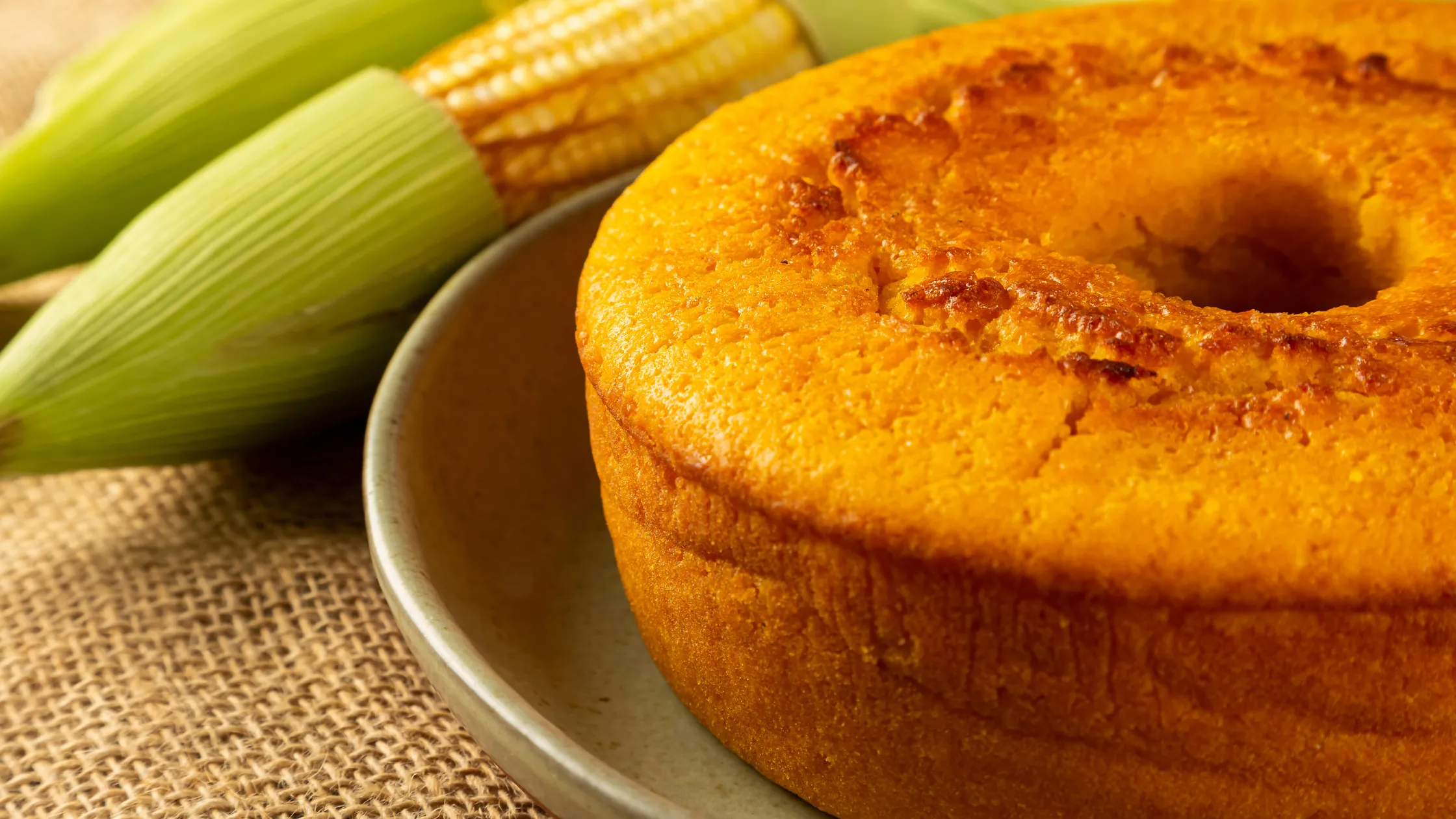
The time has come to get down to business and transform theory into warm, fragrant slices. Follow this age-old step-by-step process, finely tuned for guaranteed success.
Ingredients
- 3 large eggs (whites and yolks separated)
- 1 and 1/2 cups of refined or granulated sugar
- 1/2 cup (tea) of sunflower (or corn) oil
- 1 cup of warm whole milk
- 2 cups (tea) of water-ground cornmeal, very fine
- 1 cup (tea) of traditional wheat flour
- 1 heaping tablespoon of fennel seeds
- 1 tablespoon of baking powder
- 150g of guava paste cut into small cubes
- Extra wheat flour or cornmeal for coating the guava paste.
- Butter and cornmeal for greasing the pan.
Method of preparation
- Prepare the environment: Preheat the oven to 180°C. Grease a bundt pan (22cm to 24cm in diameter) with butter and sprinkle cornmeal over the entire surface.
- The anti-fraud secret of guava paste: Cut the guava paste into 1 cm cubes. Place them on a plate with two tablespoons of wheat flour (or cornmeal), shake well until all sides of the cubes are whitish. Sift to remove the excess and set aside.
- Aeration of the dough: Using an electric mixer or a whisk, beat the 3 egg whites until stiff peaks form, but not dry. Transfer to a clean bowl and set aside.
- The creamy base: In the same mixer (no need to wash it), combine the egg yolks, sugar, and oil. Beat vigorously until a light, whitish cream forms.
- The fusion of dry and liquid substances: Reduce the speed and add the warm milk alternately with the cornmeal and wheat flour (both previously sifted). Beat just enough to mix everything.
- The aromatic touch and lightness: Turn off the mixer. Add the fennel seeds and baking powder. Mix with a spatula. Then, gently fold in the beaten egg whites, using an up-and-down motion.
- Strategic planning: Add half of the guava paste cubes to the batter and mix quickly. Pour the batter into the greased pan. Finally, distribute the remaining guava paste cubes over the batter in the pan (they will sink slowly during baking, settling in the middle of the cake).
- Ideal cooking: Bake for about 35 to 40 minutes. Do not open the oven before 25 minutes. Do the toothpick test: if it comes out clean, the cake is ready. Let it cool slightly before unmolding.
How do I store the cake to keep it moist for more days?
Once the cake has cooled completely, transfer it to a cake stand with a lid that seals out air. Leaving it exposed on the counter accelerates starch retrogradation, causing it to harden in the morning.
Putting cornbread in the refrigerator is usually a big mistake, as the cold accelerates the drying out of corn dough. The starch tends to crystallize at low temperatures, ruining the fluffy texture we're looking for.
If you live in a very hot region or are experiencing humid days, freezing in individual slices works much better. Wrap each piece in good quality plastic wrap, pressing to remove all the air.
When the craving strikes, take the slice out of the freezer and heat it in the microwave for about thirty seconds. The guava paste will melt again, bringing back that delicious feeling of a cake that has just come out of the oven.
Choosing vegetable oil instead of butter ensures a longer shelf life for the cake's softness. Versions made with oil retain their natural moisture for up to four days without significant loss.
++ Chocolate cake with shiny ganache for special occasions.
What is the cultural significance of cornbread in Brazil?
Valuing traditional rural cuisine is a way of recognizing how our gastronomic identity has been shaped over the centuries. Corn ended up uniting indigenous wisdom with the repertoire brought by European colonizers and African peoples.
Sitting around the table to share a Cornmeal cake with guava paste and anise. It goes beyond just a snack. This habit persists almost as a manifesto for slowing down in the face of a current routine that never stops.
Records of National Institute of Historic and Artistic Heritage (IPHAN) They point out how these traditional ways of doing things keep our memory alive.
Brazilian cuisine is made of affectionate repetitions. Passing these recipe notebooks on to children and grandchildren prevents family secrets from evaporating with time.
Each ingredient carries a heavy baggage of history, adaptation, and pure popular creativity.
Bringing modernity to the preparation, without compromising the essence of the dish, is the great strength of contemporary Brazilian pastry. Respecting what came before gives us a foundation to create new things with much more authenticity.
Conclusion
Cooking traditional dishes is a silent way to nourish the soul and reclaim stories that time tries to erase.
Cornmeal cake embodies a refined simplicity, honed by the patience of generations of cooks who understood the value of time.
Understanding the logic behind oven temperature and ingredient selection ensures superior results in your kitchen.
The care put into each step transforms into soft, aromatic slices full of meaning.
With the technical and practical secrets now revealed, the next step is to turn on the oven and bring that aroma back into the house.
Gather the people you love and turn your next coffee break into a cozy and memorable moment.
FAQ – Frequently Asked Questions
Can I make this recipe using only cornmeal, without wheat flour?
You can replace wheat flour with cornstarch or rice flour to avoid gluten. However, the texture tends to be a little more crumbly and dry.
What is the best type of oil to use in cornmeal cake batter?
Use good quality, neutral-tasting oils, such as sunflower or corn oil. They fulfill the structural function without clashing with the aroma of the fennel.
How can you tell if the cornbread is fully baked?
Insert a toothpick into the center of the cake after about thirty-five minutes in the oven. If it comes out clean, with no raw batter clinging to it, you can turn off the oven.
Can I use powdered fennel instead of whole seeds?
It's possible to use the powdered version, but reduce the amount by half to avoid bitterness. Whole seeds provide a much better sensory contrast.
What to do if the guava paste melts and sticks to the bottom of the pan?
The secret is to generously grease the pan and sprinkle cornmeal over the butter. Coating the candy cubes in flour before baking solves this problem.