
French Macarons: How to Make Elegant Sweets in Your Kitchen
You French macarons They are not just sweets; they are a miniature work of art, a symbol of elegance and sophistication that transcends borders.
Adverts
Despite their delicate and refined appearance, making macarons at home is not impossible.
With the right ingredients, a little patience, and attention to detail, you can recreate these French pastry classics in your kitchen.
This practical and detailed guide will teach you how to prepare impeccable and delicious macarons, while revealing interesting facts and valuable tips for achieving success.
Find out more below:
Adverts
The Charm of French Macarons
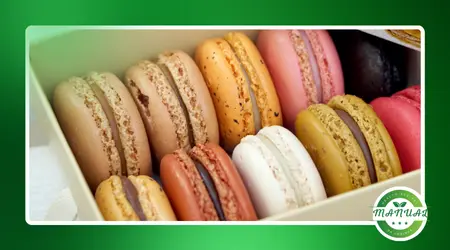
Macarons carry with them a rich and fascinating history.
In this sense, although they became popular in France, their origins date back to the 16th century, in Italy.
It was Catherine de Medici who introduced the recipe to the French court, but it was only in the 20th century, with the Ladurée confectionery, that they took on the form we know today.
In other words, two meringue shells joined by a creamy filling.
What sets macarons apart from other sweets is the combination of their unique texture and the versatility of flavors and colors.
The crispy yet delicate shells hide a soft interior that melts in your mouth, providing a unique taste experience.
This characteristic, combined with their impeccable aesthetics, has transformed macarons into true icons of global confectionery.
Furthermore, the production of macarons requires precision, patience and skill, attributes that reinforce the aura of exclusivity of these sweets.
Each step of the process needs to be carried out carefully, as any error, no matter how small, can compromise the final result.
Read too: How to make stuffed churros at home: a simple and irresistible recipe
Ingredients: The Foundation of Success
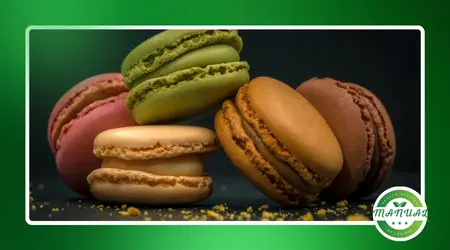
The secret to making perfect macarons lies in high-quality ingredients.
The simplicity of the recipe requires that each component performs its function precisely.
The main ingredients include almond flour, confectioner's sugar, egg whites, refined sugar and food coloring.
Almond flour, for example, is essential to give macarons their smooth texture and characteristic flavor.
So, make sure to sift it to remove any lumps.
The icing sugar, in turn, gives the shells lightness, while the refined sugar helps to stabilize the meringue.
Furthermore, using aged egg whites – that is, separated from the yolks and left in the refrigerator for 24 to 48 hours – contributes to a more stable meringue with less moisture.
Gel or powder dyes are ideal for coloring the dough, as they do not alter the consistency.
| Ingredient | Function in Revenue | Usage Tips |
|---|---|---|
| Almond flour | Shell base | Use very fine, sifted flour |
| Icing sugar | Lightness and softness | Combine with flour before sifting |
| Refined sugar | Meringue structure | Add gradually while beating the egg whites |
| Egg whites | Volume and stability | Age for 24 hours in the refrigerator |
| Food colorings | Appearance and visual appeal | Prefer gel or powder to avoid mistakes |
Step by Step Guide to Making Perfect Macarons
Making macarons requires attention to every detail, from preparing the ingredients to controlling the oven temperature.
While the process may seem intimidating, it becomes easier with practice and dedication.
1. Preparing the Meringue
The first step is to beat the egg whites with refined sugar until stiff peaks form.
In this sense, this meringue will be the base of the shells, therefore, it must be stable and well aerated.
Make sure to use room temperature egg whites as this helps create more volume.
2. Mixing Dry Foods and Macaronage
Combine the almond flour and confectioners' sugar, sifting both to ensure a fine texture.
Then, incorporate the dry ingredients into the meringue with delicate but firm movements, until it reaches the right consistency.
This step, known as macaronage, is crucial.
The dough should flow like lava, forming a continuous ribbon when lifted with the spatula.
3. Resting and Baking
After piping the macarons onto the baking sheet with a piping bag, let them rest for 20 to 30 minutes.
In short, this time is essential to form a film on the surface of the shells, ensuring the famous “foot” during baking.
Bake in a preheated oven at 150°C, monitoring carefully to avoid cracking.
++ Homemade Dulce de Leche: the complete guide to getting the recipe right
French Macarons: Customize Flavors and Fillings
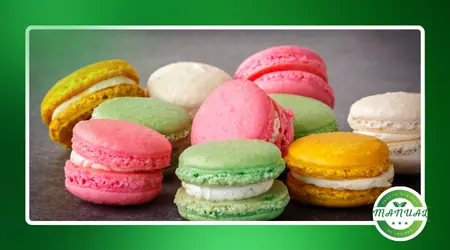
One of the biggest advantages of French macarons is the possibility of customization.
Fillings can range from chocolate ganaches to fruit creams or jellies.
This versatility allows you to create unique combinations that please all palates.
For example, a passion fruit cream filling with white chocolate brings an irresistible mix of sweetness and acidity.
The combination of pistachios and raspberries offers a contrast between the crunchy texture of the nuts and the softness of the fruit.
For the more daring, flavors like lavender or matcha green tea add a touch of innovation.
When choosing fillings, remember to balance the sweetness of the shells with more intense or acidic flavors.
In short, this creates a harmony of flavors that elevates the macaron to another level of sophistication.
French Macarons: Common Mistakes and How to Avoid Them
Making macarons can be challenging, but knowing the most common mistakes can help you avoid frustration.
A common problem is the formation of cracks in the shells, usually caused by lack of resting or high oven temperatures.
Another recurring error is the absence of the “foot”, which can occur due to excess moisture in the dough or insufficient resting time.
To fix this, make sure you weigh the ingredients accurately and follow all the steps without rushing.
Finally, grainy textures or liquid masses are signs that the macaronage was not performed correctly.
Finally, remember that practice makes perfect, and every attempt is a learning opportunity.
See also: Gourmet Brigadeiros: Creative Flavors to Impress
Conclusion
To do French macarons at home is more than just a recipe; it is a journey of culinary discovery that requires patience, technique and passion.
In short, despite the challenges, the result is rewarding: elegant and delicious sweets that delight both in appearance and flavor.
With the tips, tables and techniques presented in this article, you are ready to begin your adventure in the world of French pastry.
Turn your kitchen into a macaron workshop and surprise your friends and family with unique creations.
After all, few pleasures are as satisfying as creating something sophisticated with your own hands.