Food preservation tips: see how to save as much as possible!
Check out some food preservation tips, learn how to save money and make the most of your ingredients!
Adverts
Did you know that taking good care of your food can help you save money?
Fruits, vegetables and greens are very perishable.
Therefore, it is essential to use smart techniques to avoid wasting them.
Planning your meals helps you avoid overbuying.
Adverts
This ensures that all ingredients are used. For example, citrus fruits keep best in the refrigerator.
Many thrown away foods can still be eaten.
This also brings extra nutrients and diversity to our diet.
Additionally, composting turns trash into fertilizer, helping the environment.
Therefore, being creative in the kitchen can bring new flavors and make better use of food.
Find out more below:
++ Cauliflower cream recipe and the best side dishes
Top Tips
- Plan your meals to avoid over-shopping and make the most of your ingredients.
- Store citrus fruits in the refrigerator to extend their shelf life.
- Practice composting to convert food scraps into fertilizer.
- Use less common parts of food to create tasty new dishes.
- Monitor the expiration date of products to avoid waste.
Food Preservation: Smart Planning and Purchasing
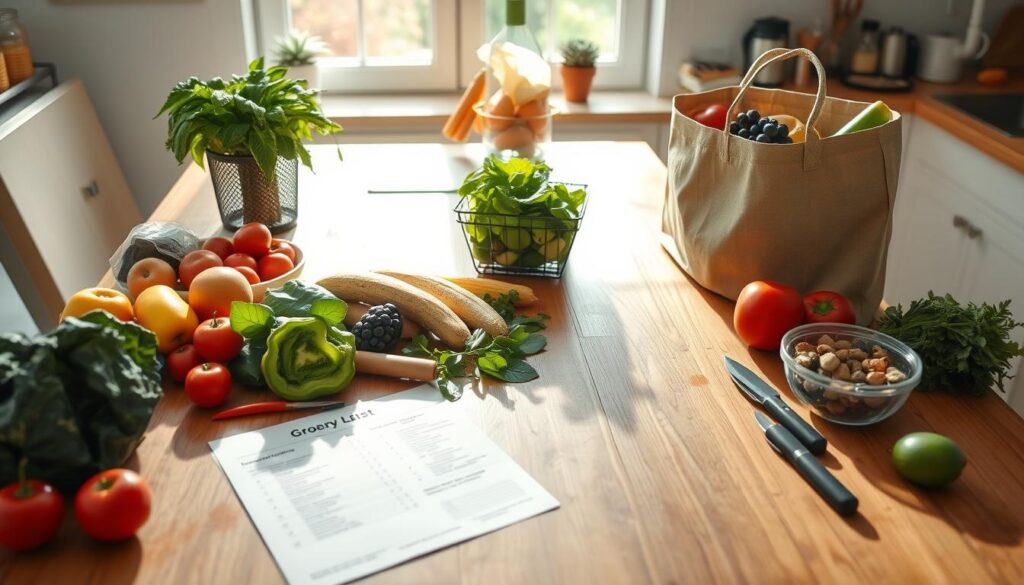
Before going to the supermarket, it is important to do a purchasing planning.
In this sense, it helps to avoid spending more than necessary and to use all the food.
In short, according to the UN, Brazil throws away 27 million tons of food per year.
Most of them come from our homes.
Therefore, organizing your purchases in advance and making a list helps a lot.
This way, you avoid buying things you don't need. It also helps you save money.
To make a smart food shopping, choose seasonal products.
They are fresher and cheaper.
Also, it's a good idea to monitor what you eat. This will help you avoid wasting as much.
Almost 40% of food thrown away in Brazil is intentionally discarded.
Therefore, it is important to know what you eat.
When shopping, think about the quality of the food.
In this sense, natural and organic products are better for you.
They have more nutrients and less chemicals.
Planning your meals can save you time and money. Making a weekly menu is a good idea.
This way, you avoid eating bad things at the last minute.
In short, having a menu also helps you introduce new foods. It varies what you eat and keeps the diet interesting.
++ Homemade Vegetable Cheese: Check Out Some Delicious Recipes!
Effective Storage Methods
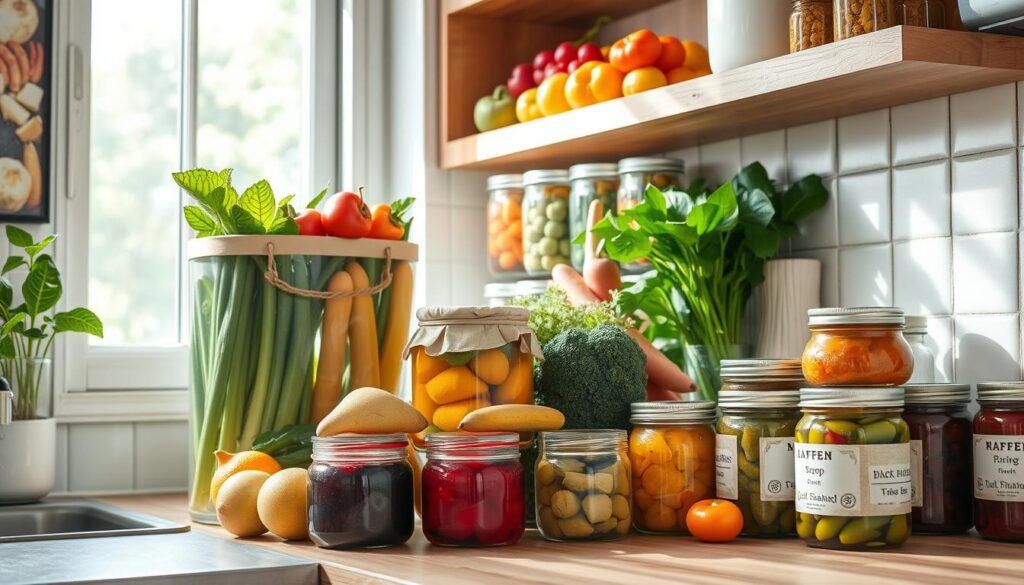
Using effective storage methods is crucial to preserve fresh food.
This also guarantees safety and maintains the quality of food.
In this sense, each type of food needs a specific method to remain fresh and nutritious.

A refrigeration is the best option for perishable items. This includes meats, dairy, fruits, and vegetables.
It is important to keep the temperature between 0°C and 4°C to preserve quality.
Here's a quick guide on how to preserve food:
| Method | Food | Temperature | Duration |
|---|---|---|---|
| Refrigeration | Fruits, vegetables, meat, dairy | 0°C to 4°C | Weeks ago months |
| Freezing | Meat, fish, vegetables | -1°C to 10°C | Months |
| Canning | Fruits, vegetables, meats | 100°C to 120°C | Months ago years |
| Dehydration | Fruits, vegetables, meat | Variant | Months ago years |
O freezing of food below 0°C to allow microorganisms to grow.
This also maintains the quality for a long time. For example, meat and fish can last for weeks or months.
O canning is another effective method.
It involves heating food quickly and sealing it. This kills microorganisms and prevents oxidation.
Fruits, vegetables and meats are well preserved this way.
A dehydration removes moisture from food.
In fact, this inhibits the growth of microorganisms and reduces size and weight.
Methods include sun drying, oven drying and freeze drying.
In short, these practices of food storage help reduce waste.
Ultimately, they ensure you have safe, fresh ingredients year-round.
Comprehensive Use of Food
O full use of food helps reduce waste and enrich our diet.
In this sense, using all edible parts, such as stems and leaves, improves the diet and saves money.
We often discard valuable parts without knowing their nutritional value.
Adding these parts to recipes like soups and healthy snacks is very beneficial.
In fact, this benefits both your health and your wallet.

A 2022 study showed that 125.2 million Brazilians face food insecurity.
This shows the importance of full use of food to combat hunger and reduce waste.
Exploring new flavors and textures makes meals more interesting.
For example, pineapple peel is rich in fiber and vitamins. It can be used in teas and juices.
Broccoli and parsley stalks are also great for soups and dips. They are rich in essential nutrients.
++ Homemade hummus recipe and some other accompaniments
| Part of the Food | Benefit | Suggested Recipe |
|---|---|---|
| Broccoli Stalks | Rich in fiber and vitamin C | Broccoli Cream |
| Carrot Leaves | Sources of antioxidants | Carrot Green Pesto |
| Banana Peels | Contains potassium and magnesium | Banana Peel Cake |
Composting helps restore soil and promotes agriculture.
In short, reusing leftovers into new dishes is smart and sustainable. For example, leftover rice can be turned into dumplings or risottos.
This saves money and ensures a more varied and nutritious diet.
Keyword: food preservation
One of the best food preservation strategies is to control water activity (thew).
Foods with thew Between 0.65 and 1.0 they have more life. This is because fungi, yeasts and bacteria do not grow well below 0.6.
So adjusting these levels helps to keep food fresh for longer.

The concept of water activity is crucial to changes in food.
It is the ratio between the vapor pressure of the material and that of pure water.
Therefore, control of this variable is key to food safety.
There are several techniques to extend the shelf life of food:
| Method | Description | Benefit |
|---|---|---|
| Evaporation | Process that concentrates food by removing water | Long-term storage of juices, extracts and jams |
| Drying | Imitation of nature to reduce the weight and volume of the product by removing inedible parts | Preservation of grains, meats, fish and fruits |
| Dehydration | Use of heat under controlled conditions of temperature, humidity and air flow | Improves the quality of the final product compared to natural drying |
| Freeze-drying | Efficient technique that outperforms other dehydration methods | Better preserves original characteristics |
With these food preservation strategies, it is possible keep food fresh for longer.
Ultimately, these techniques improve food quality.
Therefore, understanding and using these practices is essential for anyone who wants to extend the shelf life of food.
Food Preservation: Conclusion
Adopt conservation techniques is essential to make better use of food and take care of the planet.
In this sense, ancient methods, such as Roman salting, are still useful today.
They help extend the shelf life of food and prevent loss of quality.
Modern techniques such as refrigeration and freezing are important for food safety.
In short, they also help reduce waste.
Using preservatives is also crucial to keeping food safe for longer.
Adopting these practices in your daily life saves money and helps the planet.
Every little change makes a big difference.
From prehistory to today, conservation techniques have evolved a lot.
Effective storage practices are good for the health of the planet.
They help to save and make better use of food.
Ultimately, integrating these techniques into your daily life is an important step towards a better future.